
Essay 9 min
I WAS HERE: The Subtle Art of Underlining
For several years now I have been reading In Search of Lost Time together with an older woman. Or, I think I have. I do not actually know her age, or her gender, but I can still…

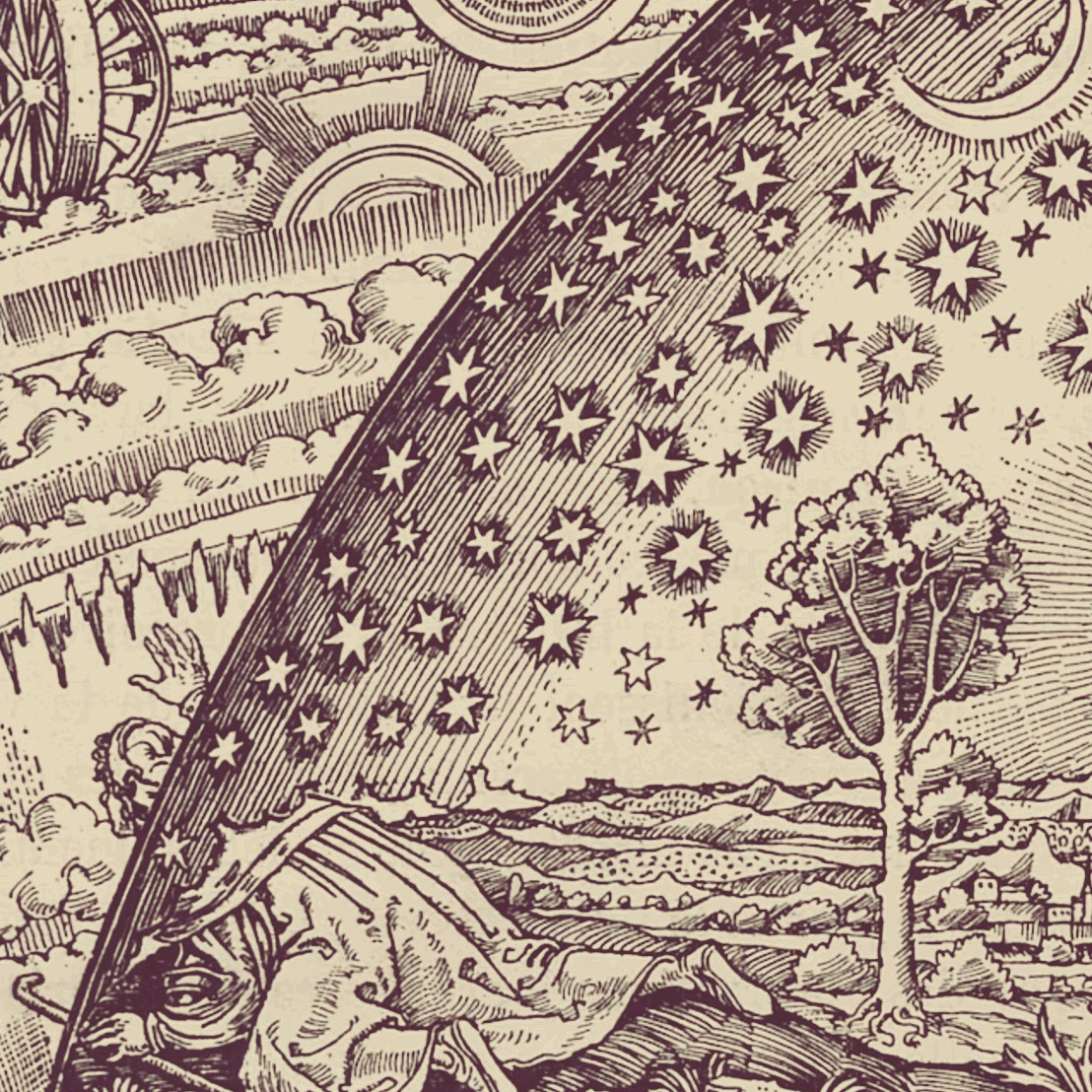
I think I’m more interested in maps than in travel itself.
As a child, I split my time between the fact calendar, Donald Duck comics, and my atlas. I preferred the detailed spreads where I could zoom in on the Russian countryside or a desert and fix my gaze on a single point bearing a name: like Boshnyakovo on Sakhalin. In the very same second people walked around there, living their lives, not knowing that I was thinking about their well-being. This was before Google Maps, so I had no way of finding out what those places actually looked like. I had to guess, imagine (much like how Marcel Proust would read train timetables before bed, not to lull himself to sleep, but to picture what each station looked like at a given hour, the people wandering about, keeping time). Eventually, he’d drift off. Something like that, maybe.
It continued with an obsession for certain countries, like the Aztec’s Mexico, or densely populated, waterlogged Bangladesh. Then I grew up and thought I had to adjust to adulthood, until I became young again, because you are who you are.
All of this came to mind recently as I caught myself habitually checking Substack’s subscriber map. The sun never sets on this little empire, where all those childhood dots on the map are now inhabited by people who read me. You are from Taiwan, Turkey, Uganda, Argentina, and fifty other countries. And you're all connected by these words. I don’t even have to make you up anymore.
(Please send me a postcard in the comments!)
Welcome away ꩜
Jörgen Löwenfeldt
And in case you are not subscribing already (new chapter every Sunday):

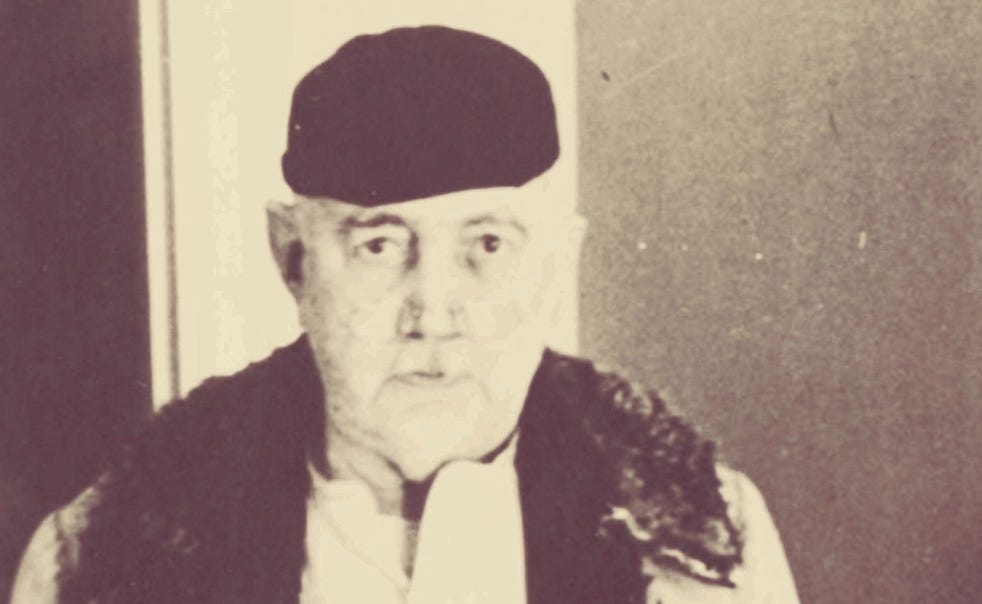
At St Lars Psychiatric Hospital in Lund, between 1909 and 1944, a baron named Eric Hermelin sat and translated Persian poetry. He had lived a drifting life, in service of everyone and no one, least of all himself. One army after another discharged him, once he had drunk, stolen, and proven himself unfit. The younger Eric needed alcohol as a balm, for he was dangerously fragile. Once, he was deeply wounded by his father’s joking remark about his hairstyle, a comment that led the son to flee the country. And so it began.
He drifted between the jails and bars of continents like a fern spore in the wind, in search of something or in flight from something else. From the outside, it was more of the same. From the inside, he was waiting for the signal.
The first half of his life he was an ego, a self. The second half he was a we, a whole. From the psychiatric hospital, he dedicated himself to that whole, which he had, in his flight, managed to absorb through the Sufis and the Persian language.
In a mantra lasting decades, he translated ten thousand poems. Through a cleansing of the soul, he transposed line after line into his mother tongue. For himself alone, and therefore for everyone. The baron found his way home by finding his way out. A logic logical to the initiated, like an unsolvable cipher to everyone else.
I, who am still a self, enter the story exactly 103 years after the work began. That is when I come across Eric Hermelin’s Persian Anthology at a clearance sale. Everything half price, announces the sign in the window. A sudden urge to possess arises. The antiquarian praises my choice and tries, with his eyes, to form a picture of how I came to it. Without success, or so I interpret it.
At home I begin leafing through sentences about “humiliation as opportunity” and “emptiness as gift”, and at that moment I remember my first encounter with the baron, a few years earlier, in what I took to be another life. No, how could the antiquarian have guessed any of this?
She and I were both doing something for the first time. At the city library we scanned the shelves for Persian poetry in Swedish, so she could show me something that was hers. She spun, smiling, in the summer light of the rotunda while I took pictures to preserve the moment.
Upon returning home, she would face floods, a pandemic and uprisings. Years of duty, exploration, humiliation and joy. Of this we knew nothing: here was our parenthesis, in which anything could still happen. She wrote poems to me in her language. I wrote poems to her in mine. Within our perhaps lay an eternity. Only for a brief period, we know now, but is a life even measured in time?
In the years that followed, we kept in touch. Sometimes we spoke daily, sometimes months would pass. How are you, I ask, when videos from Tehran appear in the news, with the woman on the car roof twirling her hijab like a sling in her hand. The internet is shut down, she replies. But I’m doing well.
And I think of Eric Hermelin. Everything simply continues, even memory, which rearranges itself to fit what happens next. What happens needs to happen, so that what happens after can happen, we might say, if we choose to trust the Sufis. Eric needed all his wandering in order to be still. I need the absence in order to register the presence.
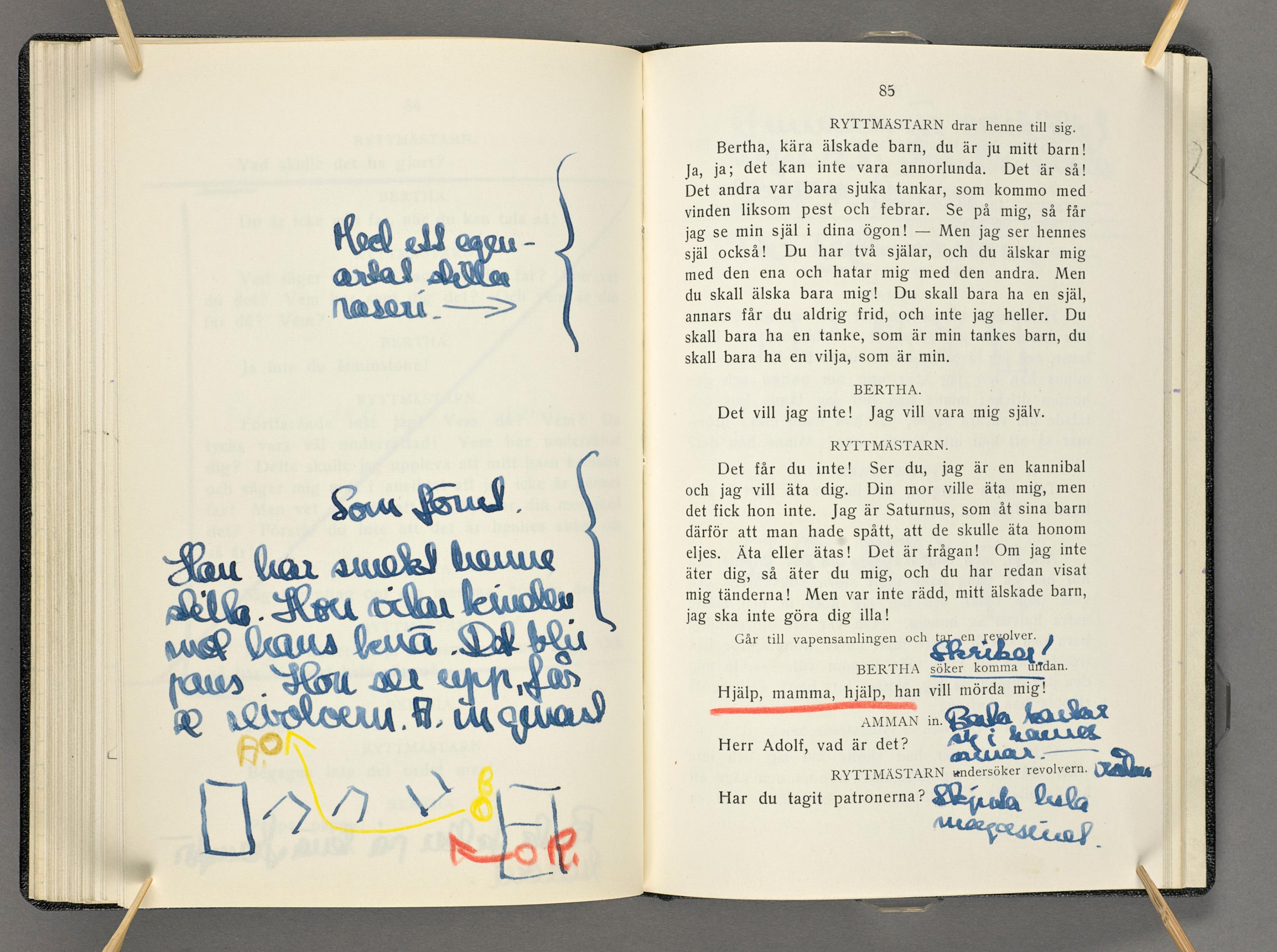
On a Sunday morning I think of all this, sitting on the edge of the bed, Persian Anthology open beside me with its many underlined pages, and the memories of the poet suddenly close as yesterday, while the background logic begins to trawl silently through years of drifting.
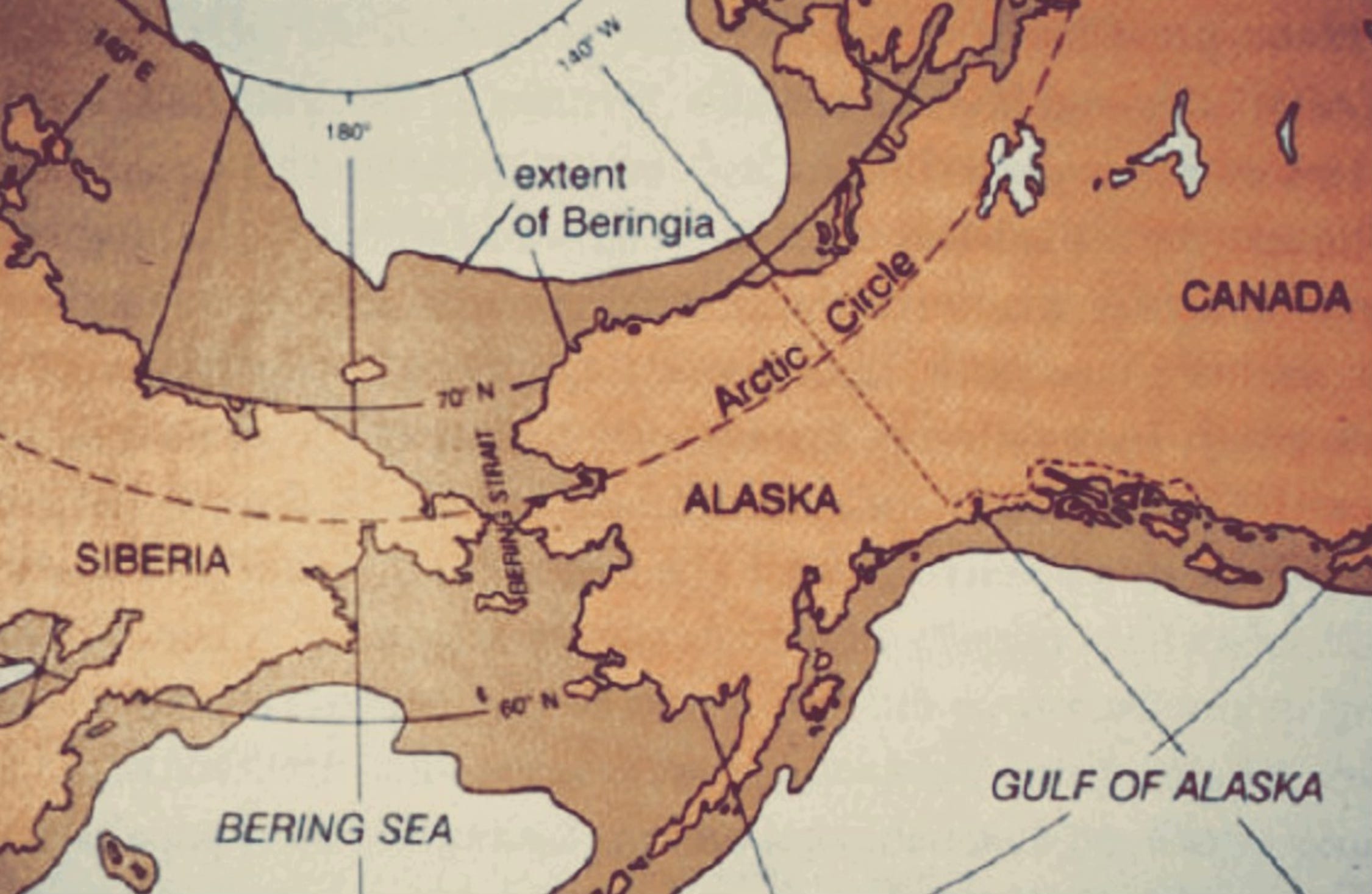
The father of Moderna Museet’s director Pontus Hultén, Eric Hultén, was the geographer who coined the term Beringia to describe the landmass that once stretched between Asia and North America.
There lived people who built houses, ploughed fields and cultivated crops, who cared for their crying and laughing children, grew jealous and fought. All upon ground that has long since become the ocean floor. Despite all those thousands of years of human lifetimes, they had no idea they were living in Beringia, since Eric had not yet been born, and of course they had no inkling that his son would one day befriend Marcel Duchamp, let alone what a urinal was, or how one could become the subject of an art-world controversy.
What they did know, without question, was everything essential to the human experience. Just as all people know it, feel it, or come to realise it eventually. All time is the same time. The building blocks, the same. The Beringians knew the shame of being cast out after insulting a friend, they felt the tenderness of a hand brushing a cheek, and they too often contemplated the impossibility of existence.
How do we even exist? several Beringians wondered, backs turned to the future ocean floor, gazing into the cosmos as the tectonic plates beneath them slowly drifted apart, millimetre by millimetre.
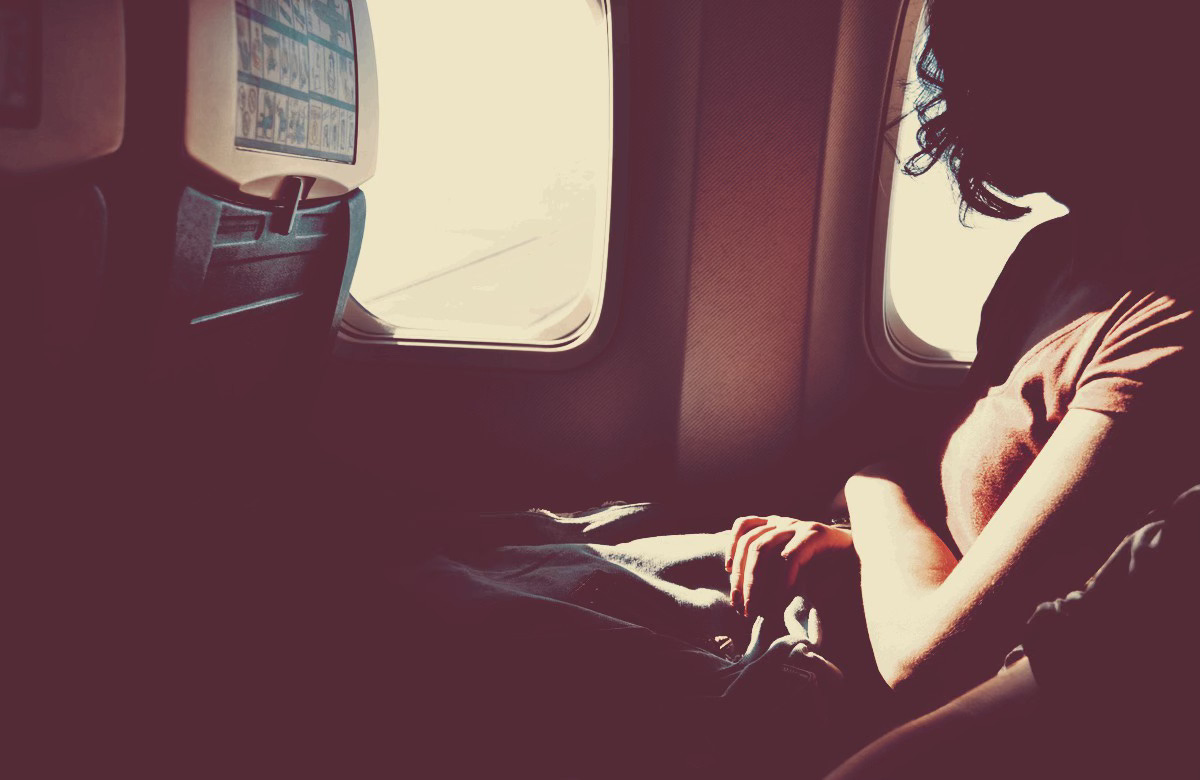
Flight attendants weren’t allowed to read books on board. It might make them seem absent. Escapism wasn’t permitted on the job, not when there were passengers afraid of turbulence and others in need of more Heineken.
There were, however, no rules against writing. Probably because there had never been any need for one. Flight attendants were not generally associated with authorship, even though they belonged to one of the few professions with a genuine external perspective. They landed and lifted off between cities and countries, switched currencies and languages, and over time learned to find their way everywhere, through whims and myths, local customs and global manners. As though, after a lifetime in the job, they were handed a cultural master key that unlocked the entire world. And they could have told you about it, had anyone asked.
Which is why no one said anything when she, leaning back in the fold-down seat, wrote in her diary, twelve thousand metres above the ground, somewhere between Armenia and Mongolia, while the passengers slept their way to Japan, save for a few who were watching Braveheart or Toy Story 3. Had they noticed her, they would have seen her as a curiosity, like a rugby-playing botanist or a carpenter with a passion for ballet, rather than a slacker. It wasn’t even a proper book, more of a booklet, where she pasted in tickets and flyers and Polaroids, and between the lines wrote all the things she never told anyone. Those who might have understood couldn’t relate to the lifestyle, and those who could relate to the lifestyle wouldn’t understand.
So she wrote the following, about her time in Amsterdam or Istanbul or Miami or possibly Santiago:
If I had a second life, I’d stay. I’d be everything I can’t be – the one who remains, who becomes your wife, does the weekly shop, buys a toy poodle and signs up for obedience classes. Someone who marvels at the grandeur of the universe, but only after watching a film about space and only then, because otherwise there’s too much going on – with the children, the lawn, the loose roof tile on the shed, and pelargoniums are on offer and I want the Mårbacka kind. And when, after ten years of marriage, you cheat with a younger colleague, I forgive you, because I’m the type who forgives, because men are men and I’m under no illusions, and when we go on ski holidays as a family I simply enjoy sitting by the fire at the après-ski, because I’m someone who has, someone who feels she has everything.
And she read over what she had just written, somewhere above Tashkent, and wondered what she had just written, because none of it matched anything she recognised in herself. So she wrote again, to revise it:
And if I had a third life, I wouldn’t do any of that. I never meet you. I live beyond childbearing age in a suburban collective where we let budgies fly loose through the flat. We barbecue on the beach until November, then we buy a van and drive to Sicily, take up that offer of one-euro houses, and renovate one after another in North African style. Until the great natural disaster, which hasn’t yet happened, when the group splits apart, after the great betrayal, which hasn’t yet happened either. I fly home, take a job at a nursery and complain about the children whenever I get the chance. And I never meet you.
She didn’t understand that either. It had simply arrived, like a truth. And then she thought that perhaps, at this altitude, after thousands of flights through thin atmosphere and near space’s strange signals, she had come into contact with her other dimensions. That the only reason she could reach them, and no one else, was because none of the other flight attendants had tried. People assumed they existed only in the singular, when perhaps they were unfolding in multiple places at once. All you had to do was choose, right above Tashkent, twelve thousand metres up.
She wrote that in the diary too, which by now had come to resemble a short story, or even the beginning of a short novel, sparing her from writing about what had really happened, in Amsterdam or Istanbul or Miami or possibly Santiago. Where she might have stayed, had she been the kind who could stay and go deep. Maybe it’s better never to have loved than to have loved and lost, was something she didn’t write, and didn’t even think with her conscious thoughts. When she was finally interrupted by the signal. The one indicating she was needed. She shut the booklet quickly, as if caught by her mother, and tiptoed over to the glowing red light in row fifteen, where a woman asked if it was all right to open a packet of peanuts, and it was. And it was nothing else. It was only that.
Thank you for reading.
– Jörgen Löwenfeldt ✦ jorgenlowenfeldt.se ✧ bagatellerna.se ✦
This dispatch was sent to five hundred and forty-eight readers. If my writing resonated with you, consider sharing it with a friend who might feel the same, or leave a comment.
A warm thank you to the seven sponsors of The Bagatelles: Billy, Björn, Mafalda, Monica, Anders, Johan and Paul. Your belief in my work keeps me going, and as a paid subscriber you have access to all content, including my literary diary and the novel Zenopolis.
To receive new posts and support my work, consider becoming a free or paid subscriber.
For several years now I have been reading In Search of Lost Time together with an older woman. Or, I think I have. I do not actually know her age, or her gender, but I can still…
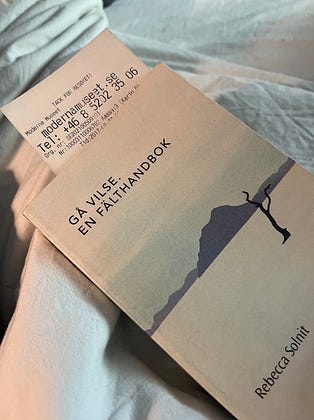
When you do things in public, things happen that you could never have expected. You might say that surprises are, in principle, the only thing to be sure of. One such moment…