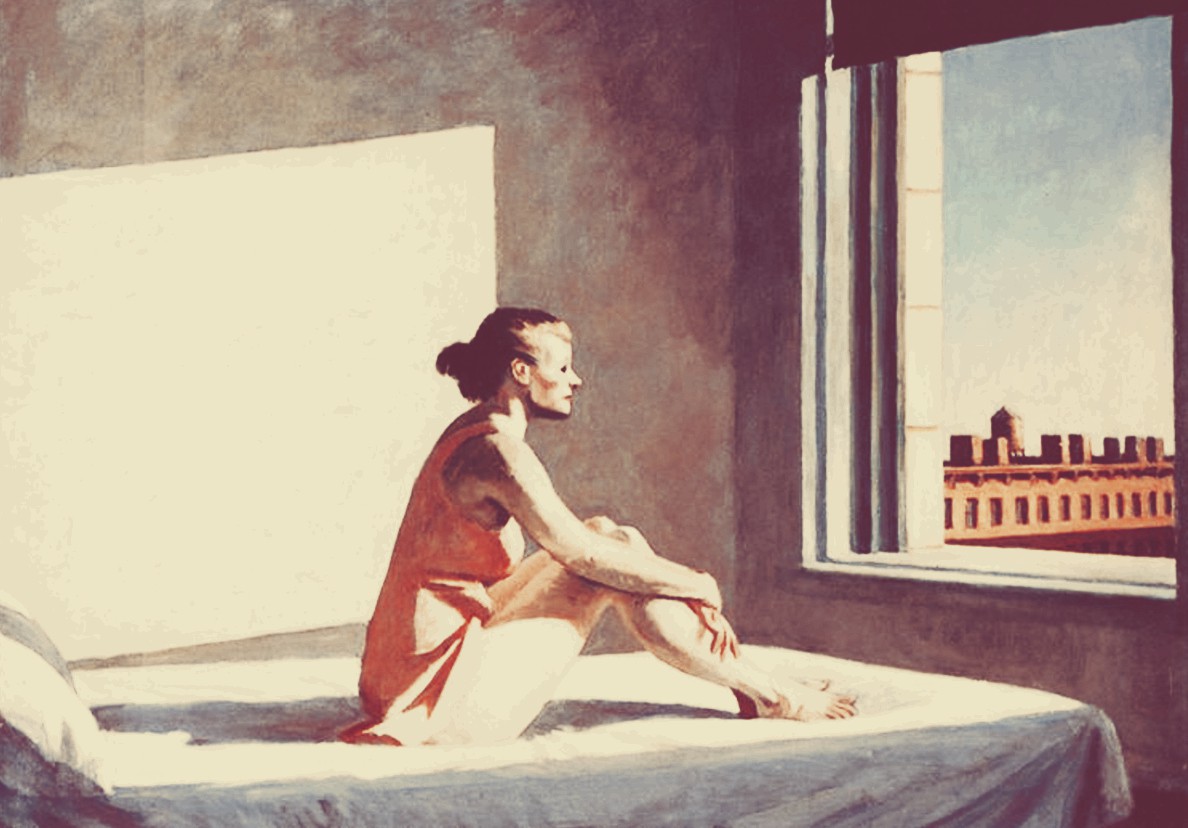
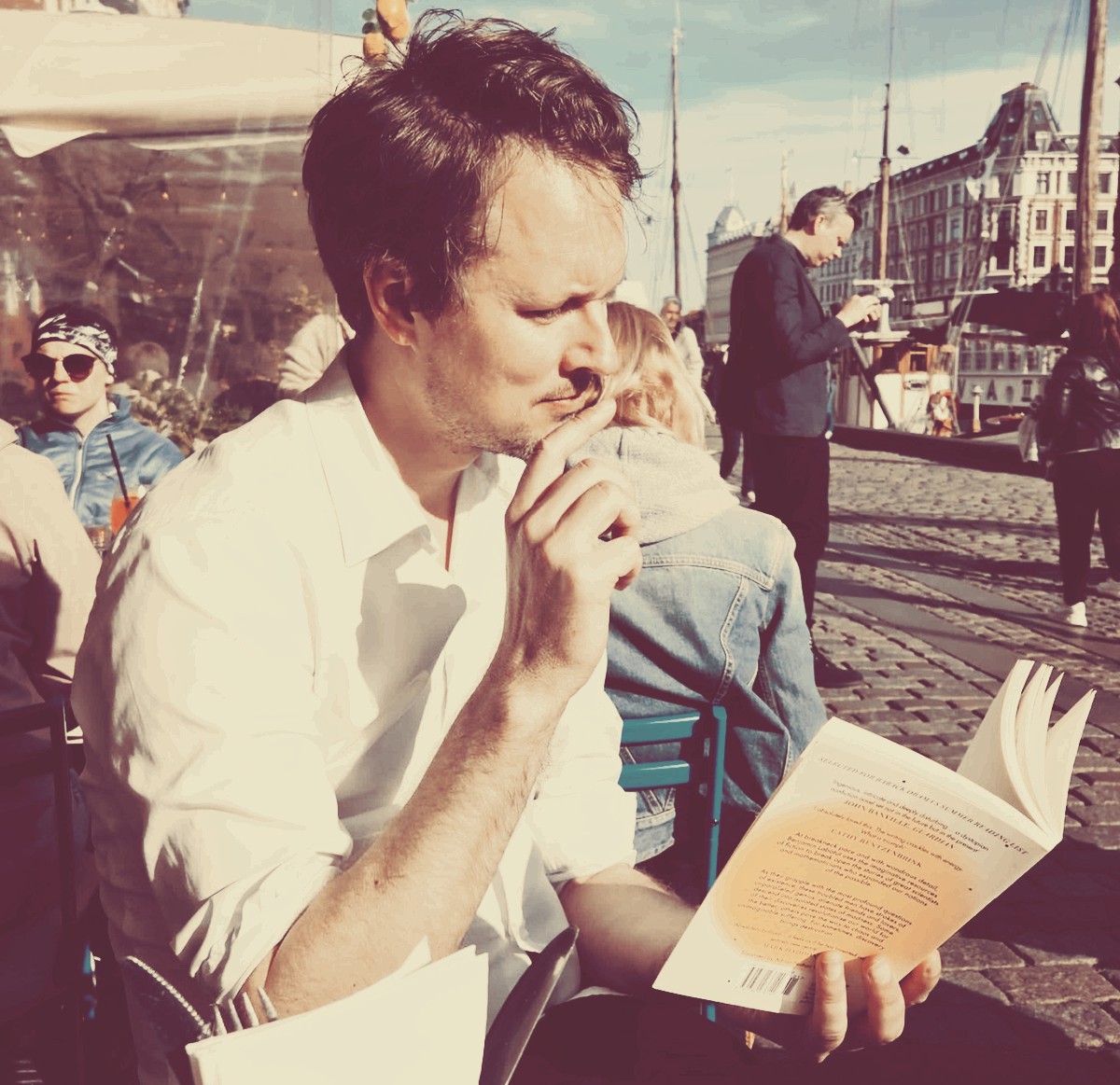
Ingmar Bergman arguing with August Strindberg. Source.
For several years now I have been reading In Search of Lost Time together with an older woman. Or, I think I have. I do not actually know her age, or her gender, but I can still picture her. You see, she is the previous owner of my paperback edition of the series. For long stretches I see no sign of her as I read, but then something happens, sometimes after twenty or so unmarked pages, that makes her draw a faint pencil line in the margin.
As when Marcel Proust talks about the moment one wakes from a leaden sleep. She thinks this passage is particularly good:
How then, searching for one’s thoughts, one’s personality, as one searches for a lost object, does one recover one’s own self rather than any other? Why, when one begins again to think, is it not a personality other than the previous one that becomes incarnate in one? One fails to see what dictates the choice, or why, among the millions of human beings one might be, it is on the being one was the day before that unerringly one lays one’s hand.1
At times I begin to think she has given up. They say that ninety per cent of readers disappear with each part of the series, and statistically she ought to be one of them, but then I see her traces again, for instance after long, dreary passages describing social gatherings in excessively knowing detail, in the marks in the margin, and I feel a little less alone in my reading. We are still us.
I myself would never give away or sell my heavily underlined pages to a stranger. It is far too intimate, and reveals too much about my personality.
Of all the lines, only these.
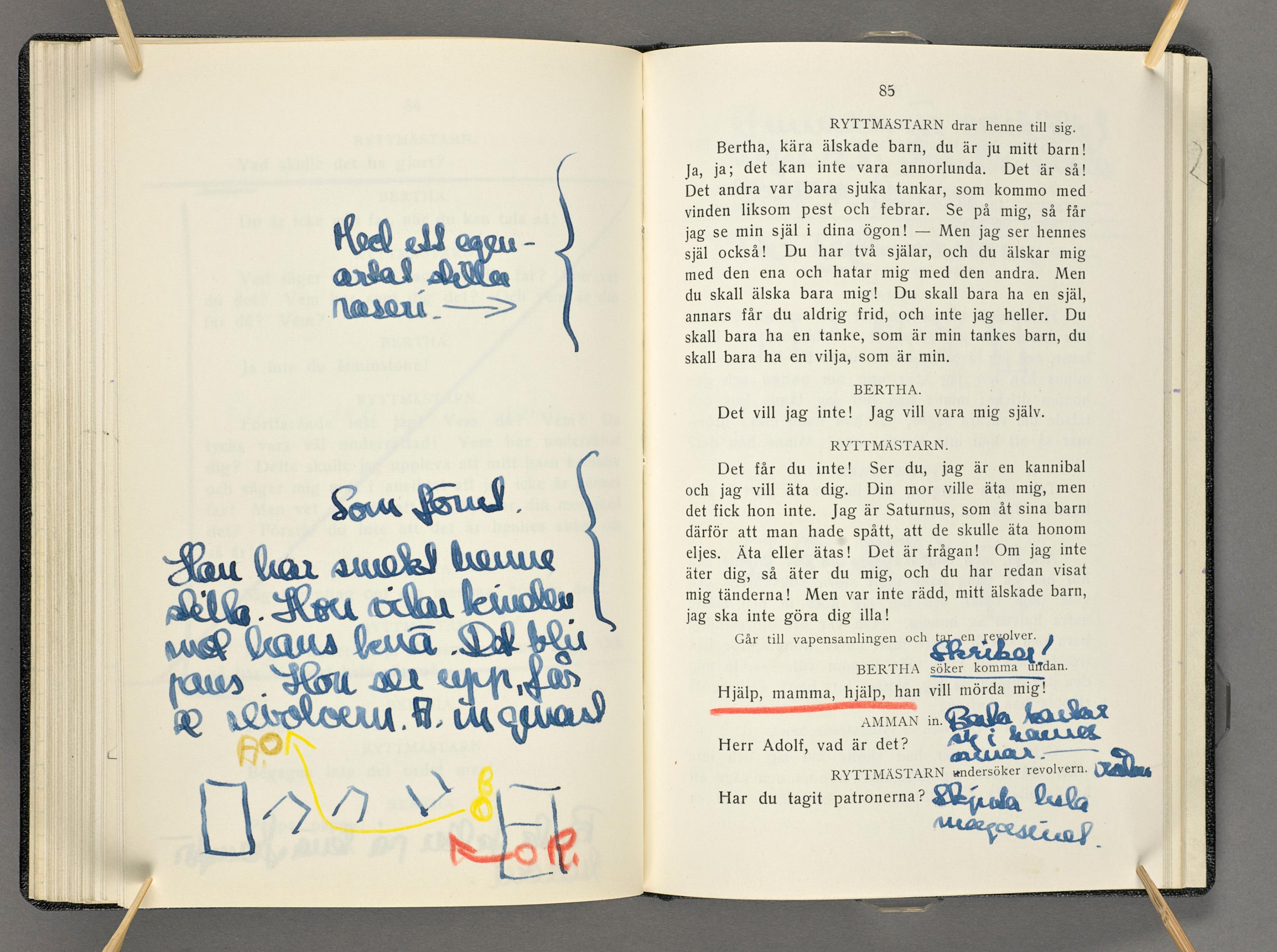
The fact that I nevertheless sit reading with a pencil is something I learnt from the Swedish film director Ingmar Bergman. After receiving a scholarship to work in his home, I was also given access to his private library. In those books he echoed across every page, in outbursts, sudden notions and exclamation marks, of course long after his death as well.
The solitary and rather quarrelsome Bergman could never let an author go unchallenged. Instead, he was fond of arguing both between and beside the lines. And he underlined forcefully, scrawled all over the pages, took possession of the books. Quite simply, he communicated with the author2.
Several decades later, these talkative reading notes reached the psychiatrist Johan Cullberg. During a visit to the aforementioned Bergman library, he found his book Dynamic Psychiatry, began leafing through it and discovered the comments. Beside a passage about “psychological thin skinnedness”, Bergman had written “I am thin skinned”, while narcissism was met with “Not me”.
Are you really allowed to do this? There are different schools of thought on the subject, as my survey on Substack Notes the other day demonstrated. One sees underlining as a suitable way to deepen one’s reading. The other treats the book with greater reverence, which also means showing consideration for future readers, whom one wishes to offer an unblemished experience.
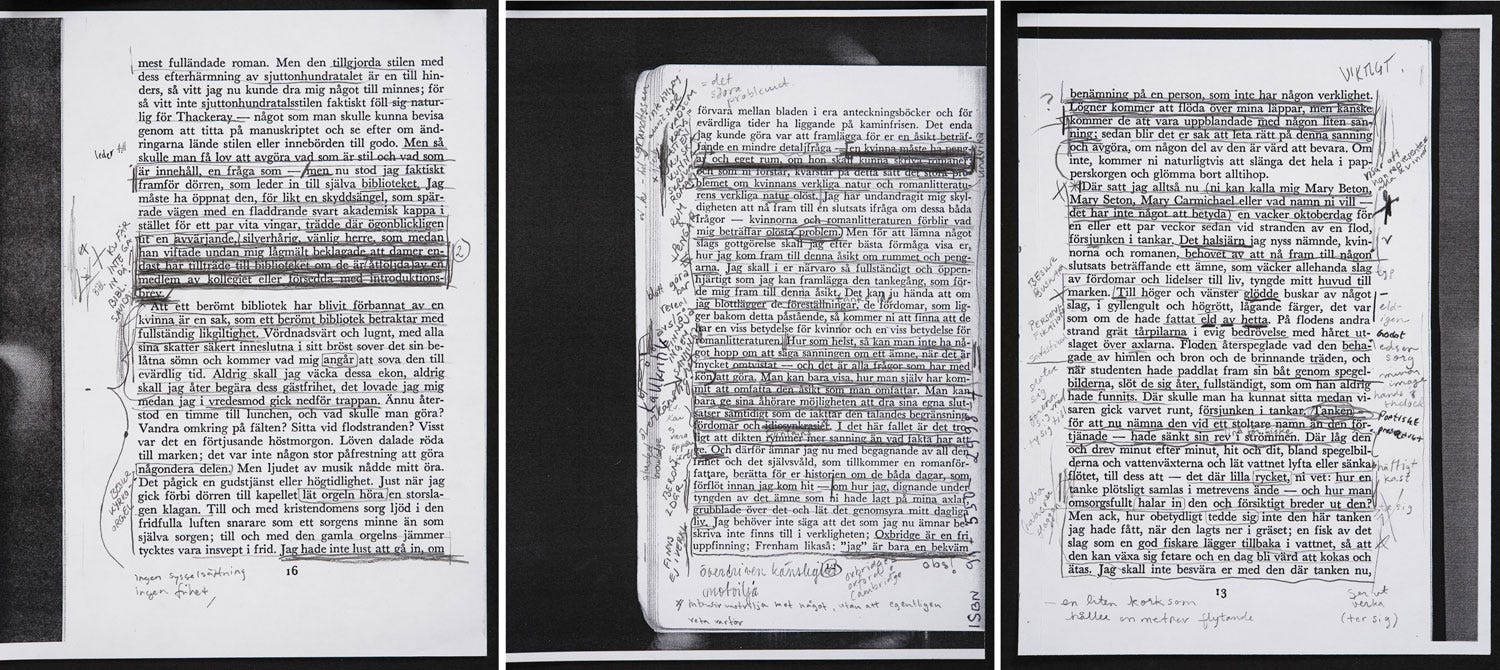
I respect both positions, but lean more towards Bergman’s view. Reading should be allowed to be both violent and physical. The picture below, incidentally, is an example of how David Foster Wallace treated his books.
Don't tell anyone, but I'm planning to make the next dispatch of The Bagatelles about underlining in books. So consider this a survey on the subject.
What's your relationship with underlining? How do you feel about reading books that someone else has already underlined? And do you have any anecdotes you'd like to share?
Asking for a newsletter that's taking a short break from the surreal.
Research suggests that the older woman who read In Search of Lost Time has probably found a workable method after all. The point is to underline just the right amount. Those who overuse the pencil seem to lose the essence amid the whole, while other people’s underlining also appears to impair the second reader’s own understanding, creating more confusion than clarity.
Perhaps I have voyeuristic tendencies, because despite this I enjoy discussing the book with a time lag.
Another person who has delved into the subject is the literary scholar H. J. Jackson, who has explored such matters in works with titles including Marginalia: Readers Writing in Books and Romantic Readers: The Evidence of Marginalia. An entire chapter in the latter is tellingly entitled “Socializing with Books”. One example of precisely this, the social aspect, is how the poet John Keats tried to court Fanny Brawne by marking the most beautiful passages in Edmund Spenser’s work and then giving her the book. Perhaps not entirely unlike the way we now send a playlist to the object of our affection, using other people’s expressions of feeling to reveal our own.
But sometimes our underlining has nothing at all to do with people we know, or even with the author. Sometimes we simply want to say: I WAS HERE. Like those with less respect for public property who scribble in library books, something I would never dream of doing.
Virginia Woolf shared my distaste for the practice. She drafted an essay (later named “Writing in the Margin”) which dealt with precisely these sacrilegious library borrowers. H. J. Jackson later interpreted this disapproval as being about who has power over the act of reading. My answer: whoever wrote last. An interpretation that the control freak Ingmar Bergman would surely have endorsed.
The Swedish artist Kajsa Dahlberg later offered her own version of the matter. She borrowed all available library copies of Virginia Woolf’s A Room of One’s Own from 1929, in Jane Lundblad’s 1958 Swedish translation. She then gathered the underlinings, comments and marginal notes left by previous readers into a new, 121-page artist’s book: A Room of One’s Own/One Thousand Libraries. Meta with a twist, bearing in mind what Woolf thought of such inconsiderate readers.
Kajsa Dahlberg, A Room of One’s Own/One Thousand Libraries, 2006
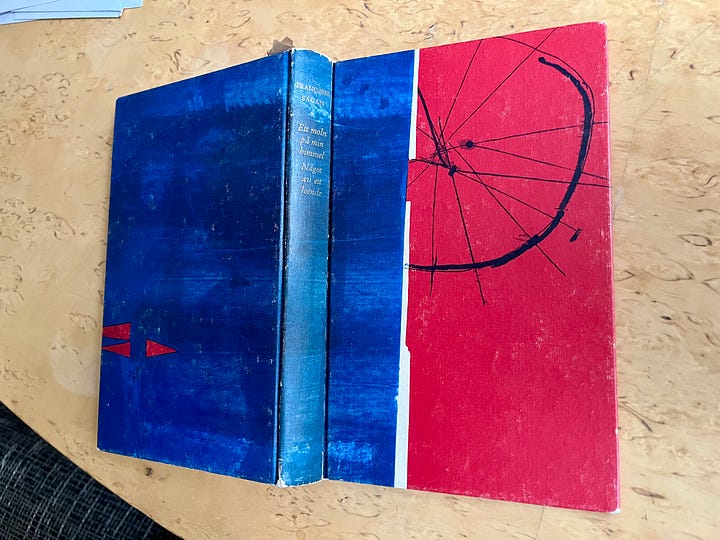
Which brings us back to what made me begin writing this essay in the first place, namely a discovery I made when I was 22 years old. For various reasons, I had not seen my grandfather since I was five, so I knew him only through other people’s stories, photographs and very vague memories of a plastic island in a swimming pool in Cannes. Until, in the bookcase of my childhood home, I to my surprise came across Françoise Sagan’s Bonjour Tristesse, which stood out among the self-help books and business memoirs. On the inside cover: his signature.
Like everything you cannot see with the naked eye, but only through shadow play and stories told after the event, my grandfather had been magnified in my mind. Not unlike the way a monster is often kept hidden for as long as possible in a horror film, because imagination almost always surpasses reality. It was as though I would be explained if only I met him, as though I were missing a central piece of the puzzle. So it was with boundless curiosity that I opened the book and found what remained of him in it.
Notes from 17 June 2006
I have not seen my grandfather since I was five years old. He is still alive and lives in the same city as I do. This is an account of all the marginal notes my grandfather made while reading Françoise Sagan’s Bonjour Tristesse/A Certain Smile.
What follows is a compilation of these passages from the stories. Some sentences were not marked in their entirety, but I have also included the unmarked text to provide context.
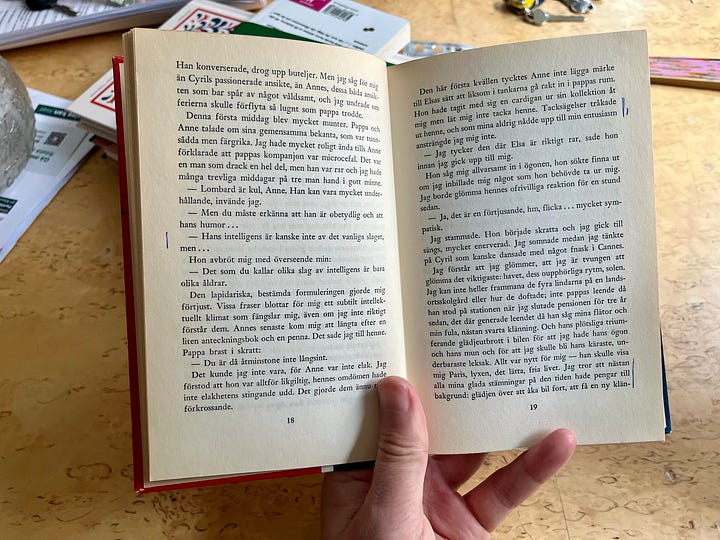
His signature is written on the inside of the left cover. The ink is the same as in the markings that follow later in the book. He does not underline words and sentences, but marks selected lines in the margin.
The book was published by Albert Bonniers förlag in Stockholm in 1957. Since my grandfather was born in 1928, he can have been no younger than 29 when he read Sagan’s books.
Bonjour Tristesse
Page 9 Although I did not share my father’s aversion to ugliness, an aversion that often led us to associate with foolish people, I felt a certain shyness in the presence of those who lacked all physical charm. I became absent-minded in their company and regarded their submissive acceptance of their inability to appeal as a shameful defect. For what are we really striving for, if not to be liked?
Page 18 “Perhaps his intelligence is not of the usual kind, but...”
Page 19 (marked twice) She had brought me a cardigan from her collection but would not let me thank her. Expressions of gratitude bored her, and as mine never matched my enthusiasm, I did not make the effort.
Page 19 I think almost all my cheerful moods at that time had money behind them: the pleasure of driving fast, the pleasure of getting a new dress, of buying records, books, flowers.
Page 23 He stood there with the water halfway up his legs and both hands resting against the deck as though against the rail of a witness box. I understood that he had no intention of coming aboard until he had had his say, and I looked at him with the requisite attention.
Page 25 She did not smile. She smiled only when she felt like it, never conventionally, as other people did.
Page 29 “I detest that kind of remark,” Anne said. “At your age, such things are more than foolish, they are embarrassing.”
No further underlining up to page 120.
A Certain Smile
Page 141 And although I believed every love story or love affair to be short-lived, I could not admit a priori that it had to be. Like all other people who live for their little comedies, I could not endure them unless they were written by me and me alone.
Page 167 My conscience’s officious little familiar spirit, which cast me in a pitiful light whenever I thought about myself, was perhaps too harsh, too pessimistic.
No further underlining up to page 239.
Suddenly I understood him, although it all stirred a certain unease. As I worked my way through the book while analysing his reading, I could combine it with everything I knew at second hand to form a more substantial image of the shadowy figure, now that I also had his chosen sentences. There were so many key passages he had left untouched, and I found the selected lines extraordinarily revealing of who he was and who he wanted to become.
It took almost two decades before I actually met him. We saw each other only once, but it was enough. The shadowy figure stepped into the light, revealed himself as merely human, and with that I was able to move on. In this instance, the underlinings had spoken plainly, and there and then I understood that it really is possible to get to know someone solely through their traces.
Just as I have come to know the woman reading Proust alongside me. I sincerely hope she keeps me company all the way to the end. If I know her as well as I think I do, there can be no doubt. She is the persevering sort.
For those with a particular interest, I recommend Erica Norman Arver’s master’s thesis, Ingmar Bergman in the Margins: A Study of Ingmar Bergman’s Library on Fårö. Link.
For months I have been searching for an opening to this essay. On walks and bus journeys, I have turned sentences over in my mind, only to discard them soon afterwards. One was…
In the autumn of 2007, naturally, none of what would later happen had yet happened. I was an intern on the culture desk at Norrköpings Tidningar, commuting weekly to the…
You are at a party, you know no one, but intend to change that. Or you are new to the job market, without yet knowing what you want to do. Or you start an English-language…