Bagatelle 3 min · Password required
The Drifters
There was a period, both short and long, when I frequented the library as a kind of second home. I had moved out and was living in cramped conditions. It just turned out that way…

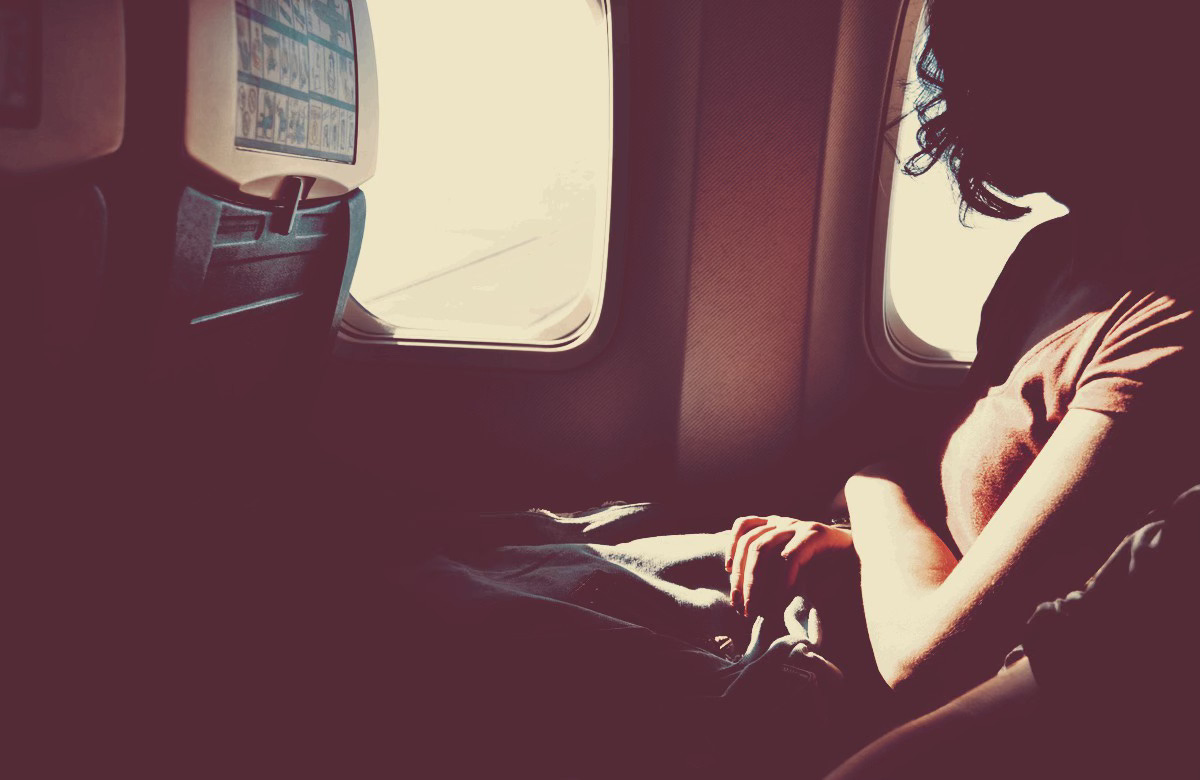
Flight attendants weren’t allowed to read books on board. It might make them seem absent. Escapism wasn’t permitted on the job, not when there were passengers afraid of turbulence and others in need of more Heineken.
There were, however, no rules against writing. Probably because there had never been any need for one. Flight attendants were not generally associated with authorship, even though they belonged to one of the few professions with a genuine external perspective. They landed and lifted off between cities and countries, switched currencies and languages, and over time learned to find their way everywhere, through whims and myths, local customs and global manners. As though, after a lifetime in the job, they were handed a cultural master key that unlocked the entire world. And they could have told you about it, had anyone asked.
Which is why no one said anything when she, leaning back in the fold-down seat, wrote in her diary, twelve thousand metres above the ground, somewhere between Armenia and Mongolia, while the passengers slept their way to Japan, save for a few who were watching Braveheart or Toy Story 3. Had they noticed her, they would have seen her as a curiosity, like a rugby-playing botanist or a carpenter with a passion for ballet, rather than a slacker. It wasn’t even a proper book, more of a booklet, where she pasted in tickets and flyers and Polaroids, and between the lines wrote all the things she never told anyone. Those who might have understood couldn’t relate to the lifestyle, and those who could relate to the lifestyle wouldn’t understand.
So she wrote the following, about her time in Amsterdam or Istanbul or Miami or possibly Santiago:
If I had a second life, I’d stay. I’d be everything I can’t be – the one who remains, who becomes your wife, does the weekly shop, buys a toy poodle and signs up for obedience classes. Someone who marvels at the grandeur of the universe, but only after watching a film about space and only then, because otherwise there’s too much going on – with the children, the lawn, the loose roof tile on the shed, and pelargoniums are on offer and I want the Mårbacka kind. And when, after ten years of marriage, you cheat with a younger colleague, I forgive you, because I’m the type who forgives, because men are men and I’m under no illusions, and when we go on ski holidays as a family I simply enjoy sitting by the fire at the après-ski, because I’m someone who has, someone who feels she has everything.
And she read over what she had just written, somewhere above Tashkent, and wondered what she had just written, because none of it matched anything she recognised in herself. So she wrote again, to revise it:
And if I had a third life, I wouldn’t do any of that. I never meet you. I live beyond childbearing age in a suburban collective where we let budgies fly loose through the flat. We barbecue on the beach until November, then we buy a van and drive to Sicily, take up that offer of one-euro houses, and renovate one after another in North African style. Until the great natural disaster, which hasn’t yet happened, when the group splits apart, after the great betrayal, which hasn’t yet happened either. I fly home, take a job at a nursery and complain about the children whenever I get the chance. And I never meet you.
She didn’t understand that either. It had simply arrived, like a truth. And then she thought that perhaps, at this altitude, after thousands of flights through thin atmosphere and near space’s strange signals, she had come into contact with her other dimensions. That the only reason she could reach them, and no one else, was because none of the other flight attendants had tried. People assumed they existed only in the singular, when perhaps they were unfolding in multiple places at once. All you had to do was choose, right above Tashkent, twelve thousand metres up.
She wrote that in the diary too, which by now had come to resemble a short story, or even the beginning of a short novel, sparing her from writing about what had really happened, in Amsterdam or Istanbul or Miami or possibly Santiago. Where she might have stayed, had she been the kind who could stay and go deep. Maybe it’s better never to have loved than to have loved and lost, was something she didn’t write, and didn’t even think with her conscious thoughts. When she was finally interrupted by the signal. The one indicating she was needed. She shut the booklet quickly, as if caught by her mother, and tiptoed over to the glowing red light in row fifteen, where a woman asked if it was all right to open a packet of peanuts, and it was. And it was nothing else. It was only that.
There was a period, both short and long, when I frequented the library as a kind of second home. I had moved out and was living in cramped conditions. It just turned out that way…
At the syndicalist party, I was one of only two English speakers, and he soon got bored of me. Since my only viable conversation partner also spoke the local language, he quickly…
In the summer of 2002 he discovered Paul Auster at the same time as others discovered alcohol or girls, and with the same thirst and eagerness as his contemporaries. As for most…