Bagatelle 5 min · Password required
The Calculated Suppers
Picasso claimed that true creativity is caused by mistakes, in order to mislead the conscious mind. Cocteau, for his part, claimed that a poet does not innovate, but listens. And…
The traces of us are not only in our genes but scribbled on slips of paper tucked into every other vase, and on the backs of paintings.
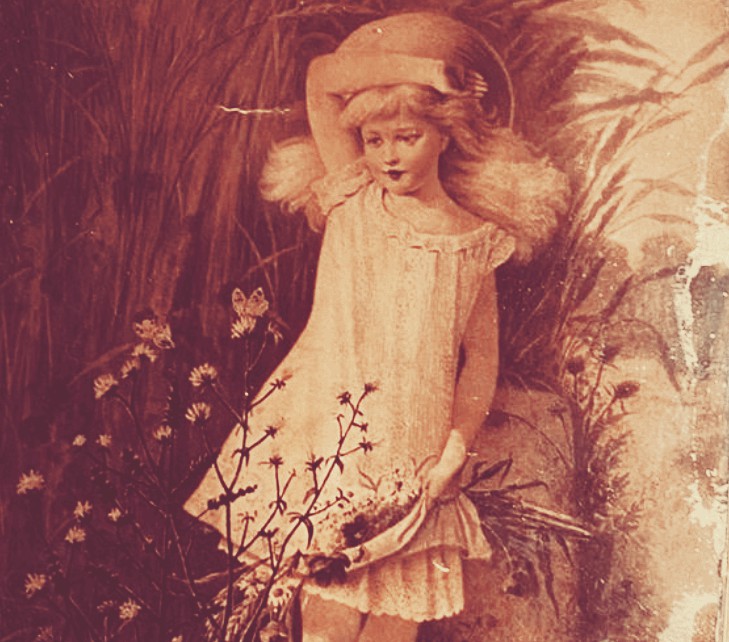
A drawing shows a girl with a posy in her hand. She has chubby legs, a gentle gaze and wears a white dress that falls over her thighs. Her hair flutters in the breeze that weaves through the reeds. Her shoes are dark leather, probably made to measure, fitting snugly to her feet. Her eyes are round and innocent, reminding me of my grandmother’s.
On the back of the portrait two inscriptions are written. The first in a cramped, flattened hand, as if it had collapsed with the years. It reads: This painting was made for Gurli, Christmas Eve 1887, but she did not survive Christmas Eve. It was created by her mother.
The next inscription is written above in a hand I recognise as my grandmother’s. She has written, in fuller, upright letters: Painted by Augusta Sporrong, née Bjurman, Margit’s grandmother.
Here lies the trauma that still echoes through the generations, the anxiety that has infected us all. The one my sister speaks of. The one my mother speaks of. The reason these what if-storms have at times sunk their claws into us, a particularly effective obstruction that paralyses all action.
How Augusta, the skilled artist, lost her girl and in the aftershocks of grief put all her care into making sure the same fate would not befall her grandchild, the little girl with the round eyes: my grandmother, who now sits in her armchair, nearly ninety-seven years old, and she sheds tears when she speaks of it.
Grandmother was hardly allowed to do anything. For everything has always been dangerous. The pavement, strangers, journeys, men. It is best to stay at home. As soon as anyone spoke of a planned holiday she would say: What would you want to go there for? And then count the days until the return. Everyone should always be at home, for at home nothing can happen to us.
Now, many years after childhood, she sits in the armchair she has always sat in and explains her home. Here everyone remains. Every object we see around us represents people. They are in the paintings, the sculptures, the books and the candlesticks. One is her own mother, who died young and whom my grandmother cared for. Her father is here too. He who only had her. And then there are all the others, who managed to pass on a few drops of genes to us who came after.
But now something has happened, says my grandmother. It is as if it no longer matters quite as much. It feels as if I am betraying them.
I think again of Gurli, the girl who died almost a century and a half ago, who never had the chance to celebrate Christmas Eve. Her presents are still here in the cupboard. What was one to do with them? Throw them away? Impossible, of course. So they remained, and my grandmother still has them, unopened. It is so strange, for it feels as if time has dissolved, as if time heals no wounds at all. That Gurli is always eight years old, and never more. That what is, is, and will remain.
Until everyone has forgotten, and at last she and we may rest.
Picasso claimed that true creativity is caused by mistakes, in order to mislead the conscious mind. Cocteau, for his part, claimed that a poet does not innovate, but listens. And…
The story doesn’t really begin. It continues, like everything else, hooking onto something already there and pulling away in a direction. But whatever came before doesn’t concern…
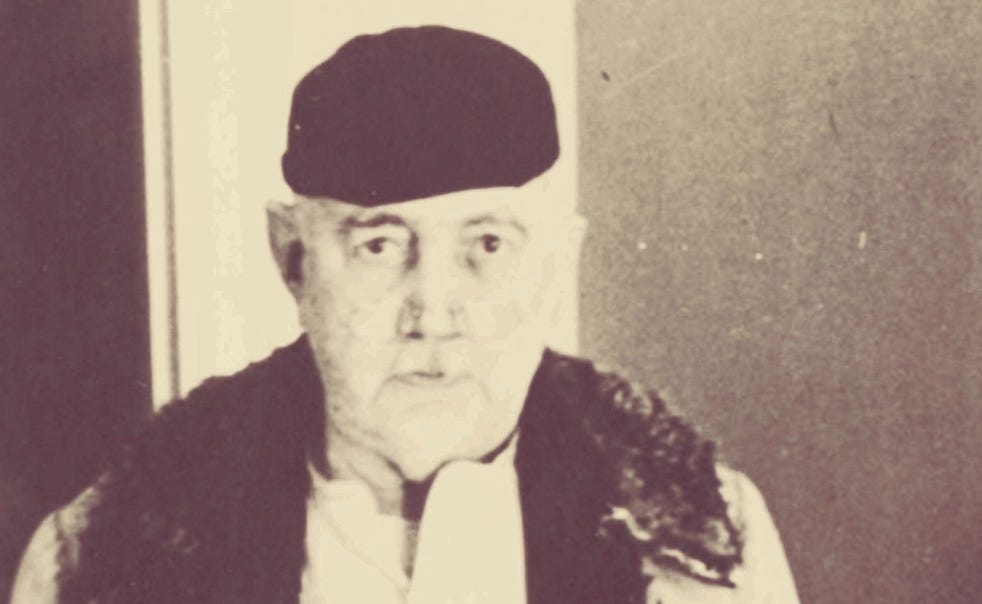
At St Lars Psychiatric Hospital in Lund, between 1909 and 1944, a baron named Eric Hermelin sat and translated Persian poetry. He had lived a drifting life, in service of everyone…