Essay 23 min
The Unfolding of The Bagatelles
Building up pressure can be a good thing and, if you need a recipe, try being a young first-time parent, never sleeping well, working constantly with other people’s demands, and…

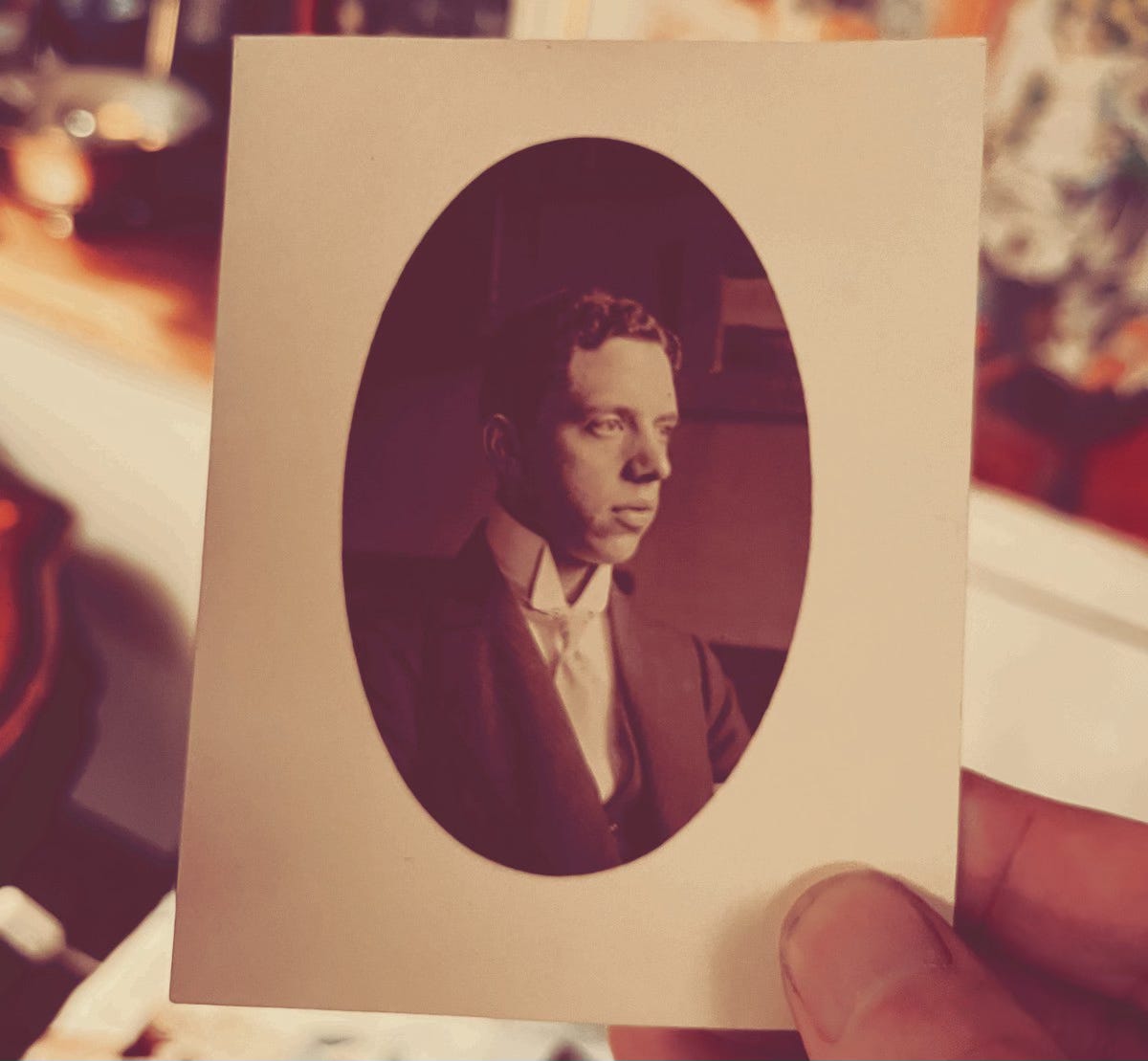
This is Ossian. More than a century ago he left for the United States. Why, no one knows. Perhaps it was just as well. Because last week, for the first time, I met the result of that journey: my American relatives, visiting Sweden to trace their roots.
I have thought a great deal about him since the meeting. His motives were somewhat obscure, but that hardly matters now. What matters is that he acted. With a single move he set in motion an entire branch of the family, who now all consider themselves Swedish descendants, even though his gene pool has gradually ebbed away. The visitor most closely related to me was my fourth cousin.
It is hardly the first time I have reflected on matters like these. Most intensely it was a few years ago when my kids and I lived with my beloved grandmother. It lasted for three months during the pipe replacement in my building. My grandfather’s old study became a bedroom and it was rather cramped and uncomfortable, but miraculously meaningful.
It is nice to get to know you, she said one morning, and though we already had a good relationship, it is something else entirely to live with someone. She is no longer alive and that time we had together I will always carry with me. Along with the thought that what is meaningful quite often lies within what is uncomfortable.
The other bagatelles are not about family, but about something quite different: what happens in the moment passion leaves the body and reality takes over, and, last but not least, a marvellous construction in the forest.
Welcome away ꩜
Ps. If you want to know more about my more distant relatives, read the blog from when I lived in Ingmar Bergman’s house. Ds.
To receive new posts and support my work, consider becoming a free or paid subscriber.

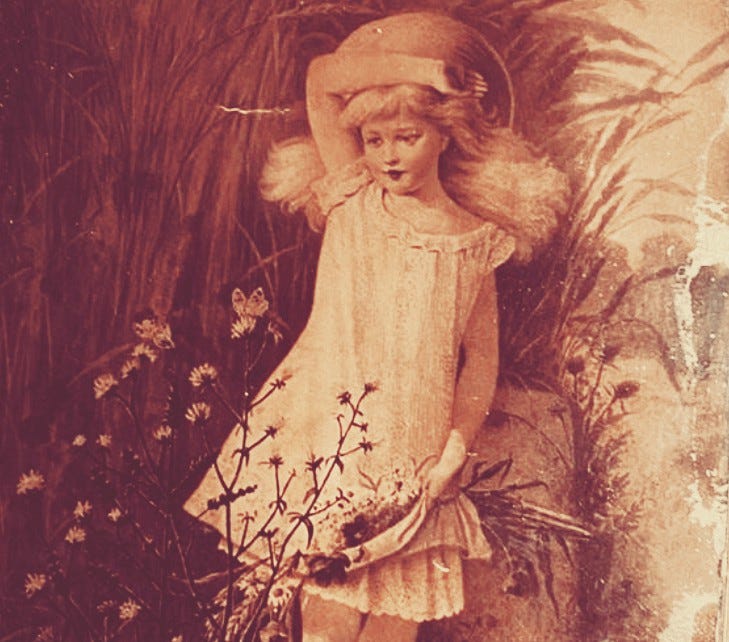
The traces of us are not only in our genes but scribbled on slips of paper tucked into every other vase, and on the backs of paintings.
A drawing shows a girl with a posy in her hand. She has chubby legs, a gentle gaze and wears a white dress that falls over her thighs. Her hair flutters in the breeze that weaves through the reeds. Her shoes are dark leather, probably made to measure, fitting snugly to her feet. Her eyes are round and innocent, reminding me of my grandmother’s.
On the back of the portrait two inscriptions are written. The first in a cramped, flattened hand, as if it had collapsed with the years. It reads: This painting was made for Gurli, Christmas Eve 1887, but she did not survive Christmas Eve. It was created by her mother.
The next inscription is written above in a hand I recognise as my grandmother’s. She has written, in fuller, upright letters: Painted by Augusta Sporrong, née Bjurman, Margit’s grandmother.
Here lies the trauma that still echoes through the generations, the anxiety that has infected us all. The one my sister speaks of. The one my mother speaks of. The reason these what if-storms have at times sunk their claws into us, a particularly effective obstruction that paralyses all action.
How Augusta, the skilled artist, lost her girl and in the aftershocks of grief put all her care into making sure the same fate would not befall her grandchild, the little girl with the round eyes: my grandmother, who now sits in her armchair, nearly ninety-seven years old, and she sheds tears when she speaks of it.
Grandmother was hardly allowed to do anything. For everything has always been dangerous. The pavement, strangers, journeys, men. It is best to stay at home. As soon as anyone spoke of a planned holiday she would say: What would you want to go there for? And then count the days until the return. Everyone should always be at home, for at home nothing can happen to us.
Now, many years after childhood, she sits in the armchair she has always sat in and explains her home. Here everyone remains. Every object we see around us represents people. They are in the paintings, the sculptures, the books and the candlesticks. One is her own mother, who died young and whom my grandmother cared for. Her father is here too. He who only had her. And then there are all the others, who managed to pass on a few drops of genes to us who came after.
But now something has happened, says my grandmother. It is as if it no longer matters quite as much. It feels as if I am betraying them.
I think again of Gurli, the girl who died almost a century and a half ago, who never had the chance to celebrate Christmas Eve. Her presents are still here in the cupboard. What was one to do with them? Throw them away? Impossible, of course. So they remained, and my grandmother still has them, unopened. It is so strange, for it feels as if time has dissolved, as if time heals no wounds at all. That Gurli is always eight years old, and never more. That what is, is, and will remain.
Until everyone has forgotten, and at last she and we may rest.
What happened just now? he asked sharply, after she had slithered past him in the doorway, as if in disgust straining not to touch him, as though their battery poles did not match, or like the way people move down in the metro, crossing the platform swiftly and surely, guided by a clear inner map of their surroundings, zigzagging past strangers to reach their destination.
Now he had become one of those for her, he felt, as she moved on towards the bedroom. For they had always at least laid a hand across a waist, a pat along the neck, or shared a quick kiss at every sudden encounter, ever since half a year earlier that summer when they had closed themselves around each other with unrefined perfection, entered each other’s orbits, forced to reckon with the other in every new step since she and he were also represented in he and she.
That pull, as natural as the planetary or as a chemical mixture unique to them, he had never doubted, but now she had slithered past him with her face turned away and stiff, as though his presence suffocated her, but she could not put it into words, could not say that perhaps it would be best if he left since she needed to be alone for a while to regain her balance, the implication being that his presence did not allow for this.
Instead she expressed her unease by refusing to touch him of her own accord, by making him feel like an odd stranger who had appeared at the edge of the living room, a colliding energy that had to be repelled.
What do you mean? she asked with surprising sincerity. It’s nothing, isn’t it? Or? I don’t know, he said, and then said no more.
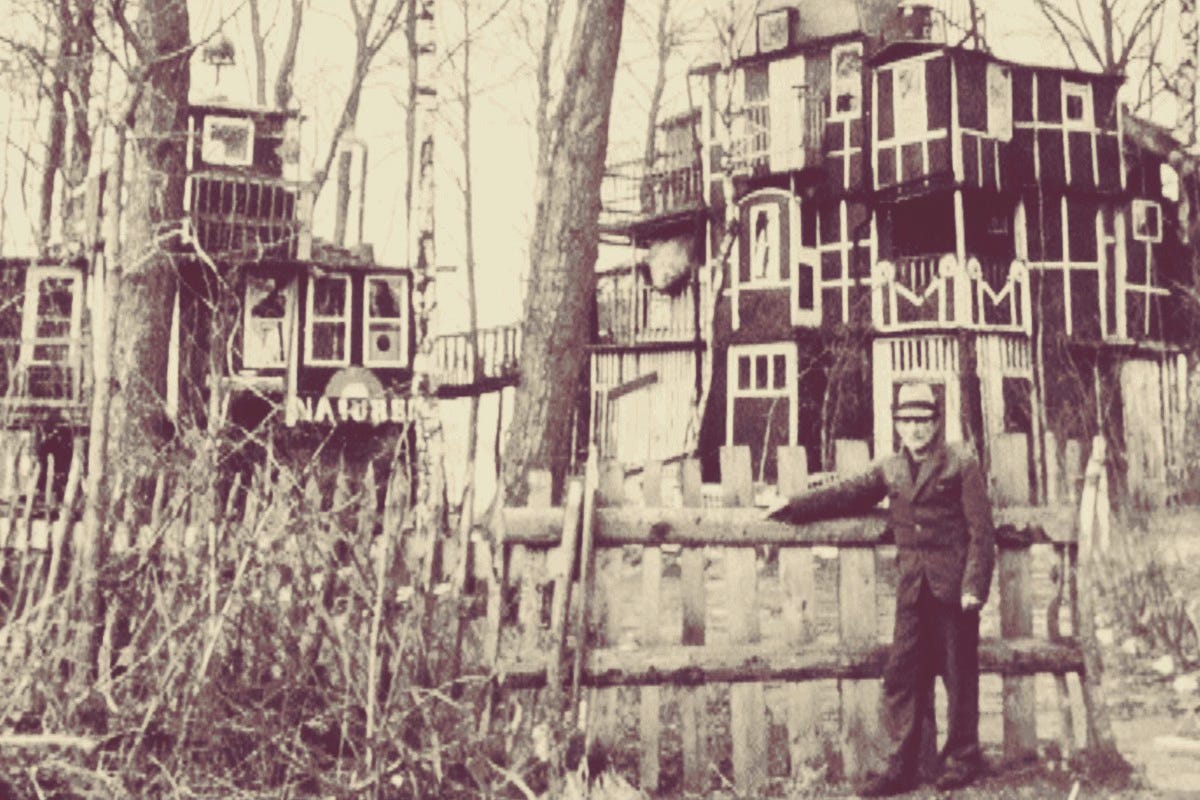
Fourteen years after he had passed away the house was to be set alight. I had cycled there with a heaviness in my chest, to see how the fire brigade would bring it all to an end. The wind howled as if the house were its flute, and the doors slammed back and forth while the men made their preparations.
A small spark from a match was all it took. The tar on the walls caught easily and soon great flames rose from the building. People said the blaze could be seen all the way down to the lake, reminding them a little of the northern lights.
I wept as if I had been amputated, for it was a piece of my own life turning to ash. It was here it had begun one early June morning when I was on the run after my father had struck me across the bridge of my nose. Only the hammer blows could be heard that hour as I crossed the field, and it was as if he called to me, and he was not even surprised to receive a visitor, though he had settled as far from others as he could. He said of course I could help, and there was room for more.
My task was to search the district for scrap timber, which I gathered on a cart and brought to the building site. Now and then I had to carry planks and raise walls, but mostly I was to listen to his accounts of the need for nurses’ housing when the war would come for us, and of course the eternal tirades about the end of the world. I listened with complete trust, for no one had ever spoken to me as an equal before, and that was surely why I was allowed to remain in his ark.
The building was unlike anything else. The rooms were stacked on top of each other like odd blocks, and at times I was a little afraid some higher addition might topple if I leaned too much against a wall. There was never any plan, instead he let circumstances shape the future. If a plank was too long, which was always the case as he never bought timber, he did not cut it but let it run on into a new room, set out a sofa and let the walls be built later, which made it impossible to rearrange furniture since the doorways were always narrow. There was no end to the house. It always needed a new room, a new staircase, a cableway, an indoor pool, a water-pump propeller, or an outdoor privy system adapted for use indoors.
The second summer he let me live in “the residence”, reached by a swaying suspension bridge from the first tower. Now he no longer wanted my help with lifting and fitting, but required only my head for reading. I had never even attempted a book before, but now he wanted my “young healthy mind” to thresh through Montaigne, Confucius and Schopenhauer, and to summarise what I had learnt for him at the end of each day. He had memorised the names over the years, reflecting on all that had passed him by in his head while his hands were occupied, but now I was to be his extended brain.
The residence was furnished for study, with desk and chair, and a chaise longue for contemplation. All of it things I had only imagined belonged to others, for I was the child of a wholesaler and knew nothing of the humanities, but now I was the only one at hand. So I tried, stumbled my way through the text and told him towards evening of the German philosopher’s words about the illusory and destructive nature of affirming the will, or of the Frenchman on how a person’s true masterpiece is to live rightly.
He showed little interest in what I had to say. I thought perhaps the idea sounded better in thought than in practice, but I persevered and read it all, was given new tomes and read those as well, which I within only a few weeks grew more and more skilled at understanding and reciting. Knowledge had taken root in me, it began to grow and branch, I could add new information to old, and soon I read of my own free will, for my inner self demanded more.
Not until the end of August did he let slip that I could stop talking since he had already read all those books. He was working on the drains and now needed my hands more than my words. I was seized by a sudden fury, which turned into astonishment, and asked: So why have you made me go to all this trouble? Well, who can say? he replied with a fatherly smile.
Thank you for reading.
– Jörgen Löwenfeldt ✦ jorgenlowenfeldt.se
This dispatch went out to 1,125 readers across 67 countries. If it resonated with you, consider sharing it with a friend who might feel the same, leaving a comment, or recommending it on your own Substack.
A warm thank you to the 12 sponsors of The Bagatelles. Your belief in my work keeps me going, and as a paid subscriber you have access to all content, including my literary diary, the novel Zenopolis and all chapters of Naïveté Travels.
To receive new posts and support my work, consider becoming a free or paid subscriber.
Maybe you'd appreciate this:
✦✧ Looking for the archive? You can find every post here.
Building up pressure can be a good thing and, if you need a recipe, try being a young first-time parent, never sleeping well, working constantly with other people’s demands, and…
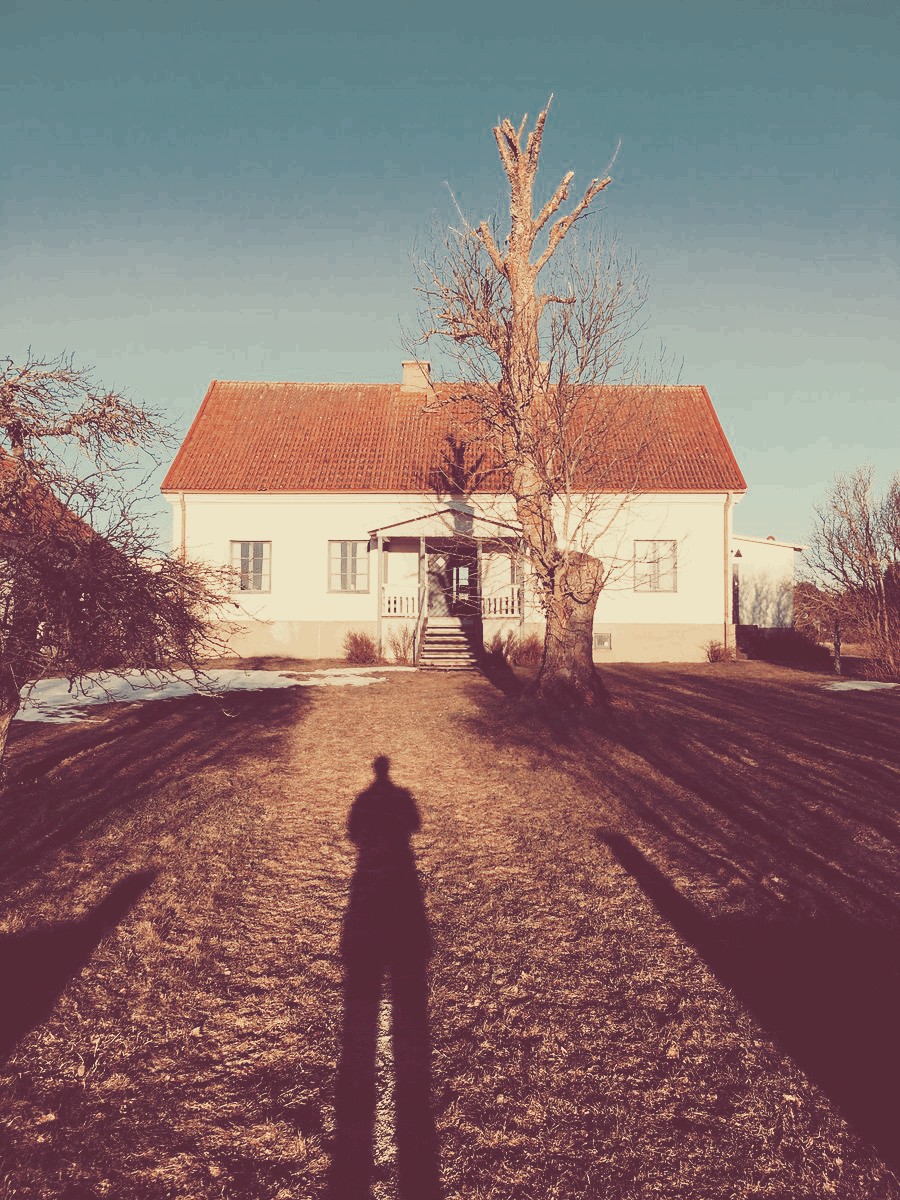
I’m related to Ingmar Bergman. Though I doubt he would have claimed to be related to me. That’s how it works with the truly famous — you look for the faintest thread, hoping to…