Five and a half years ago I left my writing account on Instagram. It felt like an obvious decision at the time, but it also meant giving up many years of hard work. That was where my career took off, where I became a writer in the eyes of others. The account was frequently mentioned in the media (I was the author from Instagram), and the address was even printed inside my debut novel. But I grew increasingly uncomfortable there, with the way the service was developing, with the people developin…
Post
The Unfolding of The Bagatelles
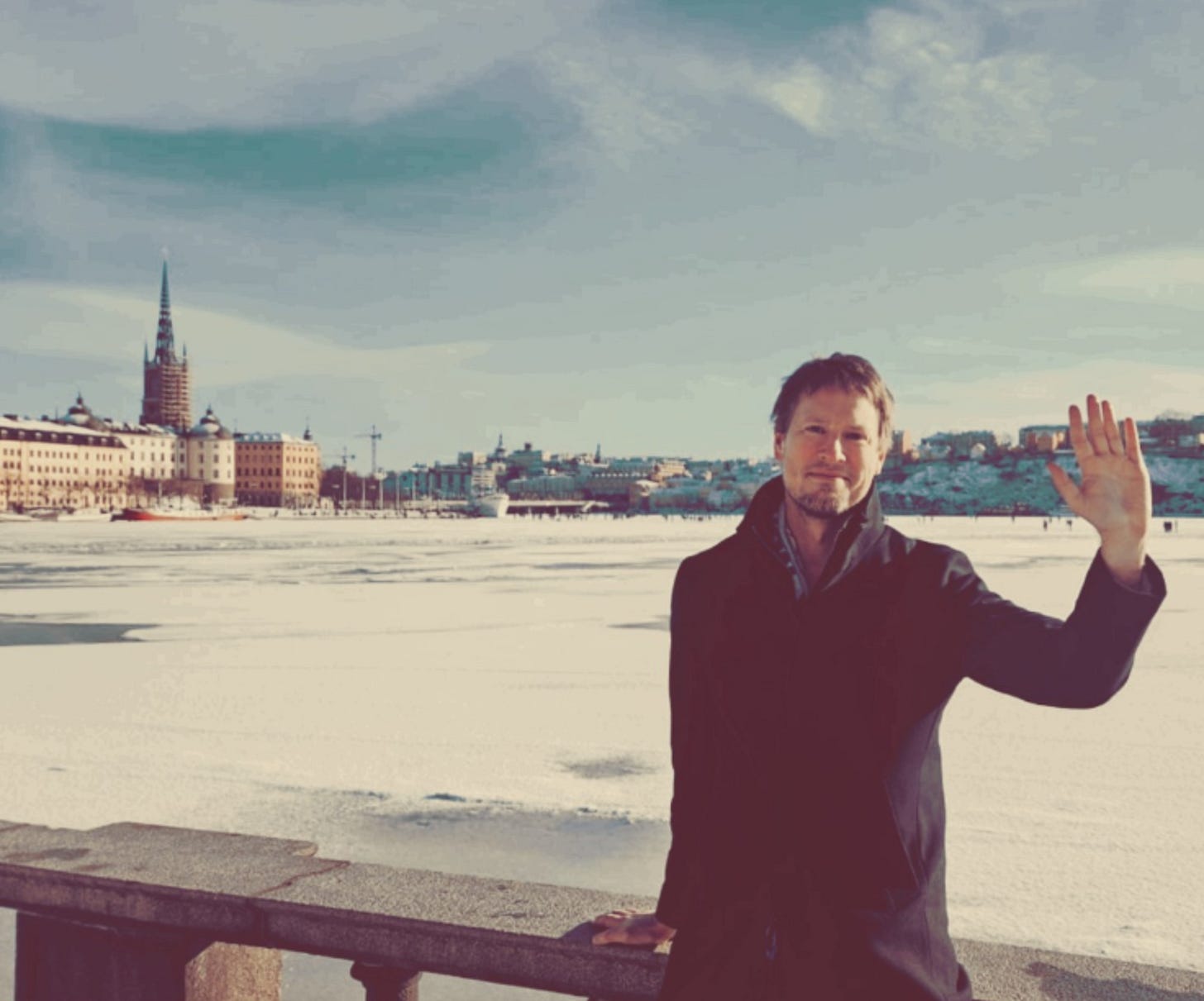
Greetings from Stockholm!
Building up pressure can be a good thing and, if you need a recipe, try being a young first-time parent, never sleeping well, working constantly with other people’s demands, and leaving no time for what you feel is your true vocation in life.
In the end I could no longer keep it inside me. I needed to write myself empty. One evening, with a ballpoint pen, I scribbled odd sentences on the backs of envelopes. Little stories about nothing, written from a part of me I had not been in touch with for a long time. The texts did not even feel like mine, more as if I were merely a vessel for something else.
This was seventeen years ago. I listened a lot to Beethoven, Dvořák and Bartók, who all wrote short pieces they called bagatelles. The name suited the envelope texts. Not least because it felt as though I were playing them out of myself, rhythmically and constantly humming as if I were Glenn Gould in a recording studio (this we can talk more about another time, the points of contact between writing and making music). The name also eased the tension, suggested that it did not matter all that much, it was only a bagatelle (in Swedish also the word for a trifle) (at the time I suffered from both writer’s block and performance anxiety).
Up until then I had often done many different things, in a long phase of exploration, and there was nothing wrong with that, but it more rarely moved into a phase of exploitation. This time I extended the project, put the envelope texts on an anonymous blog which a few years later became a relatively popular Instagram account, which led to me being noticed, sought out by publishers and agents and eventually publishing a novel. I spoke in the media. I was labelled an author. I was allowed to stay in Ingmar Bergman’s home (twice!).
Everything I had dreamed of came true.
But then the nightmares also began to come true. All those lower layers of Maslow’s hierarchy of needs began to stir. My brain could not keep up, and one contributing cause1 was the very place that had helped me forward: social media. I was forced into an abrupt halt and burned up everything I had built (see below).
Four and a half years passed. I carried on with my work, now without an audience. In the meantime I learnt patience. I wrote novels no one could read. I wrote bagatelles which I emailed to three or four people. When they became more than that I had to use Mailchimp, after a few years of that: Substack. There I came across the fellow Swede Henrik Karlsson, who wrote in English, and Celine Nguyen, who regularly emailed out dissertations on Proust. And people liked it?2
A thought crossed my mind: Perhaps my friends were out there, just thinly spread?
I wanted to begin at a new school as the pupil without a past. Not to have a cluster of “friends” on who could bring up embarrassing incidents from the gymnastics lessons. So exactly one year ago I sent my letter to zero subscribers. Then I began talking aimlessly with people, writing notes about whatever came to mind: the centre of gravity and the exquisitely muted yet sharp click of the finest pens, Cărtărescu’s roulette scene in Nostalgia, odd maps, evidence for panpsychism and Maria Strømme’s theories of an all-encompassing field of consciousness, niche signals for those who were looking for them.
At this school I would be entirely myself.
Henrik wrote about the architect Christopher Alexander’s theories of unfolding, and about how everything good that had happened to him in life had followed the same design process. And I recognised myself in that. To simplify: unfolding is the opposite of having a vision. It is about constantly being where you are, truly being there, and then taking one step more. And after that another. Treading a path through the forest rather than cutting down trees and building a motorway (but you must of course start from a core that is truly yours, otherwise it may well be time to have a vision after all).
In my case the core is my fiction, and the next layer is the person who writes the fiction, and not the other way round.
Somewhat jokingly I have called my strategy here my no strategy strategy. To be myself as much as possible and follow every impulse. Yet does it not rather resemble an actual strategy? Because it has worked. Now, seventeen years after I wrote in ink on the backs of envelopes, 2,129 different individuals from over 85 countries have chosen to read these texts, and almost 6,000 people follow me via Notes. The extremely private, by way of many years of detours, has finally become global. A journey that resembles a destiny.
So what happens in the second year here? Well, I write another newsletter, and then probably yet another. And along the way things will happen that I could never have imagined.
This mailing contains no fiction, yet it is still literary writing, which this time has taken the form of answers to questions sent in from Australia to Brazil and Sweden. The format is inspired by the artist Jens Lekman’s Q&A project Small Talk, which he has been running on his website since 2004. Because if you find something that works. Hold on to it tightly.
– Write your own question here and I will answer it in a forthcoming dispatch.
Welcome away ꩜
Jörgen Löwenfeldt
February 24, 2026, Stockholm
Become a patron of the arts
Contribute $5/month, or $2.50/month with the annual option. Your support helps me keep writing and publishing independently. As a thank you, patrons also get access to all my long-form writing, including complete novels.
Become a paid subscriber ↗
mafalda, Stockholm, Sweden:
”If you could travel through time, which version of you would you seek out or which moment?”
Let me tell you about a time I travelled through time.
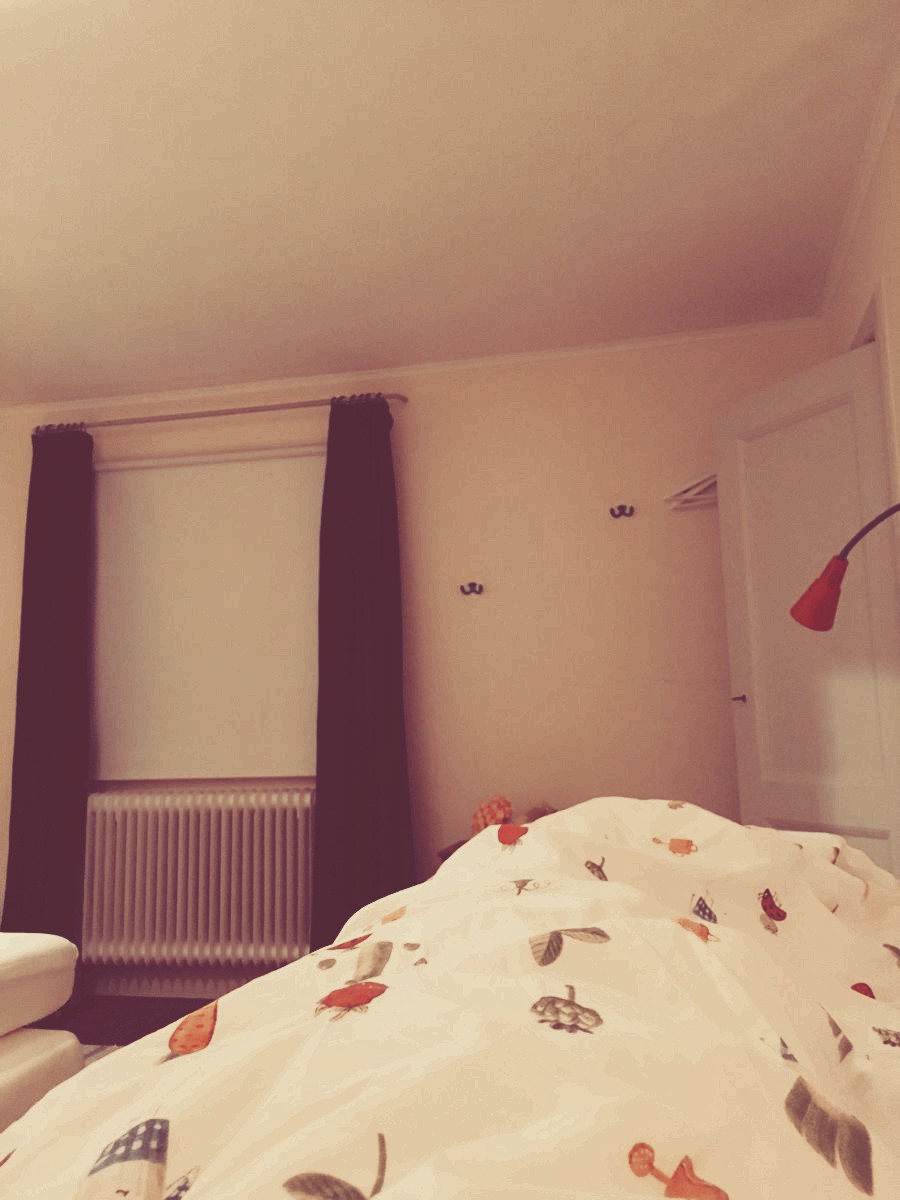
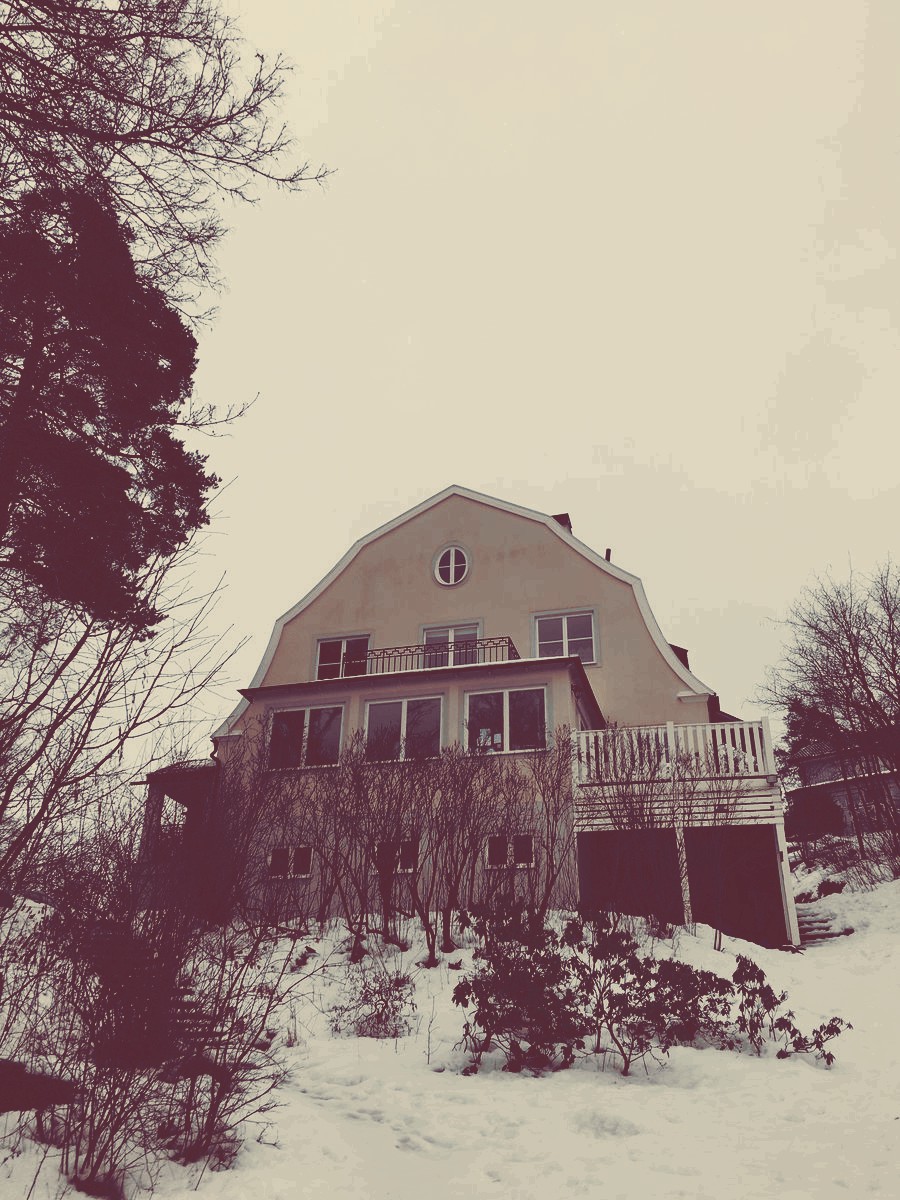
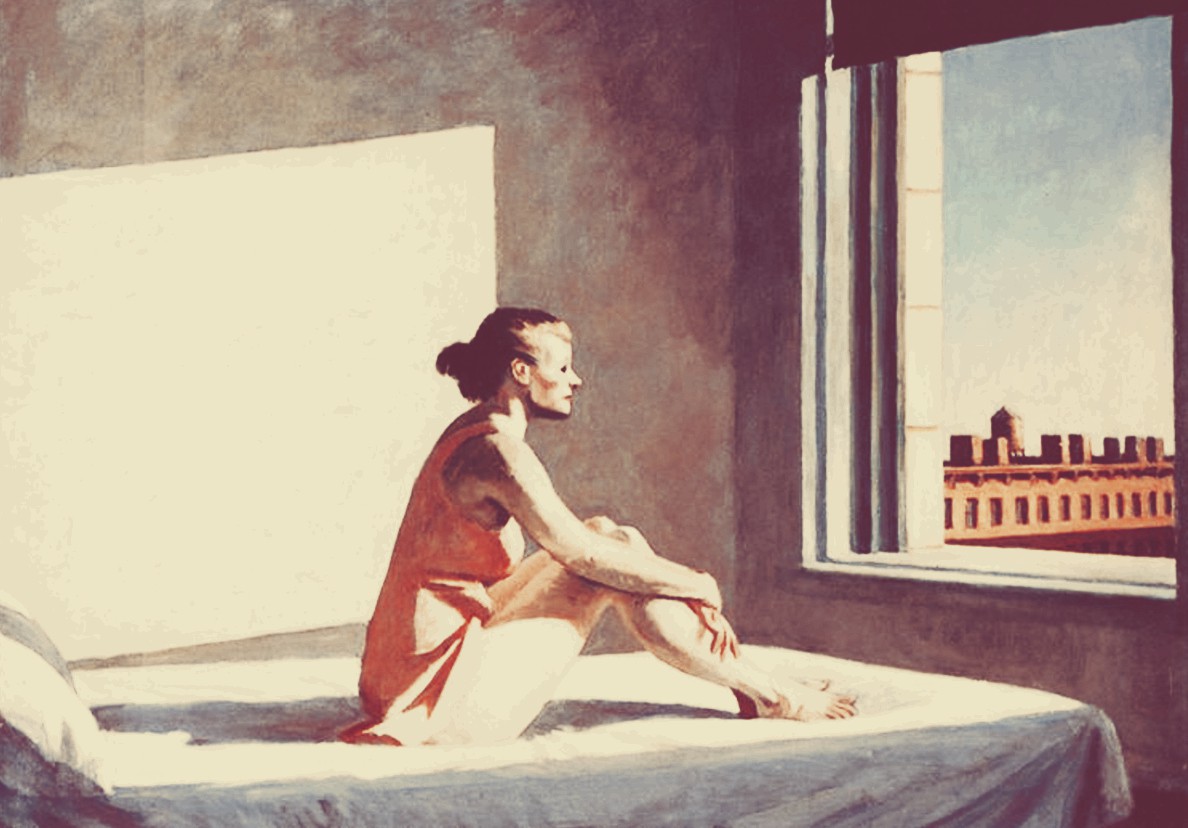
It began when I saw my childhood home listed on Airbnb and decided to book three nights there with the new owners. I brought my siblings along for the journey. And one morning this happened:
It turned out that the room they were letting was my old boyhood bedroom. We moved the beds so that I could stay in my corner. My sleep was excellent, light and clear. I woke of my own accord at half past seven. And I was careful with my foot, because I did not want to knock the bedspread down and topple the loudspeaker.
Except that it was not there and had not been there since 2003.
Even so I remained cautious, because what if, what if all the years had been a dream. What if I were in fact a teenager again. What if I had school today. What if my clock radio were to kick in a few minutes later and play Good Morning Good Morning by The Beatles and I counted down to ten in my head and rose on two. Stepped awkwardly by the beanbag, on towards the wardrobe. Put on a checked shirt, a pullover and jeans, back to the other end of the room: the washbasin, washed my face and perhaps ran the razor over my cheeks a few times.
My muscle memory had everything ready, it was simply a matter of doing it, but the Ikea armchair was not there, nor the computer corner or the television, which emitted the most irritating high pitched tone, inaudible to adults but like kryptonite to younger ears. My eyes couldn’t see it but my body knew it was here. It was confusing. I could have woken up twenty years earlier and simply continued living as if my children had never happened. Become a child myself, again.
Suddenly, and constantly during my days in the house, memories surfaced that I had not thought about since they were first stored.
I remembered the time the family had a glögg party and I ran up to my room and found it filled with odd young friends of mine or of the family. E had rifled through all my drawers and mocked me for various discoveries when I was not present. M was there with a friend. She had noted that my shelves lacked literature. Proper literature, that is. Not The Young Indiana Jones. She later took a doctorate in history. At the same party G was asked what his favourite music was and he replied: marching music. A few decades later he was my teacher when we dissected brains at the Karolinska Institute (but you will have to look that up in Ensamma tillsammans) (his favourite passage in the book, as it turned out).
Yet I was still lying in bed, in my corner. Here I had suffered more than anywhere else. The majority of my anxiety had been spent here. Thoughts about the next day, driving lessons, in the dream I lost control of the vehicle, swimming with school, where I drowned, or what would become of my life, loneliness. Would I ever meet someone?
I lay in the same corner and stared at the stain on the ceiling that once caused a hole but was repaired, and now I saw a new stain so it was probably damp. I thought that this life had turned out all right, and that I would have felt relieved had I known. There was no invisible hand leading me astray, I came to lead myself and I went on leading myself.
When my brother and I went downstairs for breakfast with our host and his nine year old son, I ran down the stairs, as I used to. Fell down them in light steps. Light, steep steps, even though it was not a school day.
By this I mean that it is perfectly possible to travel through time. For time already exists within you. So it is simply a matter of choosing where you wish to go.
Alias El’Pseudonym III, Australia:
“If you started from week 1 again, what would you do differently?”
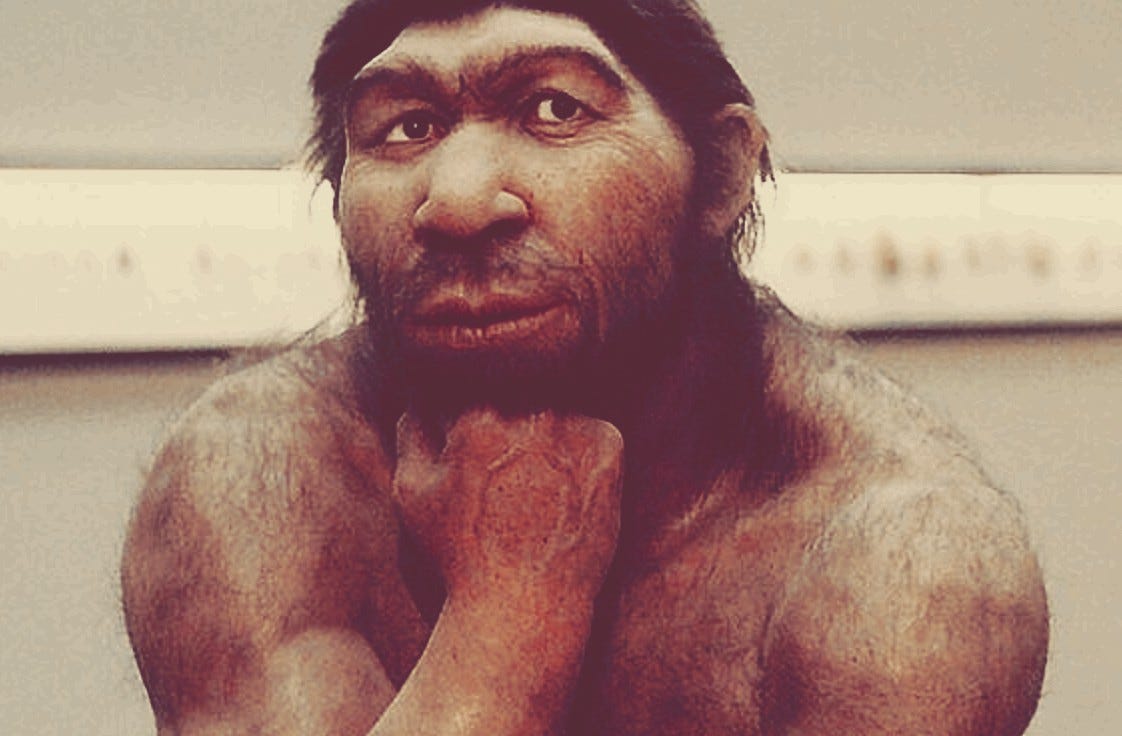
When does anything truly begin? It is a question that has occupied humanity for as long as there has been a humanity, and before that it surely occupied the Neanderthals. At some point a Neanderthal thought, for the very first time: when does anything truly begin?
That is the nature of stories, that we can in fact assign them a beginning. We can choose for ourselves when something passes from not existing to existing. That is why there is such a charge in openings. I am drawn to those that seem to begin in the middle of something, where we wake into a line of reasoning that has already been going on for a long time, where the circumstances are self evident to everyone but me: the outside observer who, step by step, tries to stitch the threads together. In other words: like being born.
So how might I have been born differently on Substack, had I been able to go back and alter the past? It may sound a little coquettish, but I would in fact not have changed very much, and that is connected to what I wrote a few paragraphs above: the choice of beginning. Another beginning might have been when I was new as a journalist in a newsroom and did not dare to speak on the telephone. Instead I emailed my interviews for several weeks before finally realising the battle was lost and I had to pick up the phone, and how I did it!
What I can say, however, is what I would have done in the same way again: I would have focused on what I cannot stop doing, I would have tried to attract other people who are like me, I would not have adapted myself. That I became dependent on the various metrics this platform offers was unfortunately easy to foresee, and I did foresee it, and I considered it worth it nonetheless. For this is the great promise of the internet.
Rolando Andrade, Portugal:
”Do you think poetry has a future in this world of speed and frenzy?”
I read a newspaper article about how dreary it had become to walk into a railway station and look around the waiting room. Everyone, absolutely everyone, was sitting with their gaze directed elsewhere. Namely in the book on their lap. The article was from the late nineteenth century, and since then we have changed our amusements several times. Quite a few of the arguments for the rise or fall of something have remained the same.
As in the early 2000s when many Swedish authors made their debut with short story collections, which experts interpreted as a response to our increasingly fragmented age. People no longer had any concentration. And to be honest, concentration has not improved very much since, I will be the first to sign beneath that. Nevertheless, people still primarily buy novels. Few read short stories and even fewer read poetry. Nothing new on that front. Those of us who write bagatelles must wait for our moment in the spotlight.
But it also depends on what one means by poetry. I listened to the Romanian writer Mircea Cărtărescu give a lecture a few years ago in which he explained what he was looking for in a text, or in anything really: that drop of poetry. I imagine it as a drop of ink in a glass of water. Before long the drop possesses the entire space and leaves not a single molecule untouched. That is how poetry works. Either it is there or it is not. And we know when it is there, because it answers a need we did not always know we had.

Noel Benson, Switzerland:
”Have you explained your fern craze somewhere?”
I don’t think I have, so here you go3:

Zeynep Tinaz Redmont, Lisbon Diaries, Portugal:
”What is your advice to beginners?”
You could, for example, do as I did.
When I had just turned twenty, in the autumn of 2003, I was a beginner. I had spent an autumn walking in the woods to process personal losses, my grandmother’s death, my girlfriend leaving me, a job that disappeared, sprained ankles, futures and a university place that had vanished because of a technical mishap. I was also afraid of working life, of becoming an office zombie.
One morning I woke with a new, all-encompassing feeling. Suddenly it was there. It felt, in earnest, like the lure of a nymph: yes, like something otherworldly, I could not resist it. It was the forest calling. Which was entirely absurd, since I had never voluntarily wandered in nature, or had any relationship with it, or cared about it, only been forced into marshland during school orienteering, yet now I had been summoned, stepped into my shoes, called the dog to me and put on a lead and then set off towards the Nacka nature reserve, for I had a vague sense of where it was.
Every day I did the same, walked myself lost in a forest I did not know and dissolved myself, because everything that weighed on and troubled me loosened its grip as soon as I stepped among leaves and pine needles and time after time I reopened my sprain, so that I limped intermittently, it would have been a strange sight if anyone had seen me, but I was almost always alone in the forest, could tramp for hours without meeting anyone, and on the rare occasions I did it was almost always an older woman I encountered and we greeted one another and went on our separate ways.
A few years later I learnt that what I had been afflicted by was called dromomania and reached the height of its popularity in France in the nineteenth century when it struck young men with broken hearts, who wandered themselves into exhaustion in their disillusion.
Here too a writing process began without my being fully aware of it, but my mind must have needed an occupation separate from philosophical theories. Earlier that summer I had begun secretly writing short pieces in my lunch break, escaping from the office where I worked. They were my first literary attempts and I need not review them, but they were important. During the autumn walks I began to formulate sentences which I assembled into short stories and poems. I needed somewhere to place them and found online writing forums where I published them as “essays” because that category had the least content (I did not really know what an essay was either). Through the community I found through texts ruminated on during walks I made friends whom I would later meet in town. Together we taped up posters with our writings.
It all culminated in the book I wrote in two days. A grossesse, a friend observed, and I had to look up the word and it fitted. In the same way that I had woken and been driven out into the forest I woke and wrote a novel. In a robe, I wrote until I collapsed into bed, slept a few hours, and then wrote again. When I was finished after two days and one night I had assembled 160 pages. At least I had written a novel in this life.
Winter had settled over Stockholm, it was soon to be 2004 and for the first time I felt I had used myself fully. One hundred per cent. What I had also created was the memory of a blazing, blissful writing process that I have never experienced again and never will, and against which I will always measure all other creation. It was pure. It was without regret or anxiety. It simply was and it was simply allowed to be.
Then I wrote every day, lived and read, and twenty two years later I started a Substack in English. Now that I think about it I do not believe this is particularly good advice for a newcomer, so I would suggest doing it in an entirely different way. It is probably more efficient.
Tombarriesimmons, Cornwall, UK:
”As someone who has taught English to many Swedish children and business English to Swedish academics and leaders of industry, I found The Swedish culture somewhat different from the English, and I learnt much when I lived in that country. What do you think of the main similarities and differences between the English and the Swedes?”
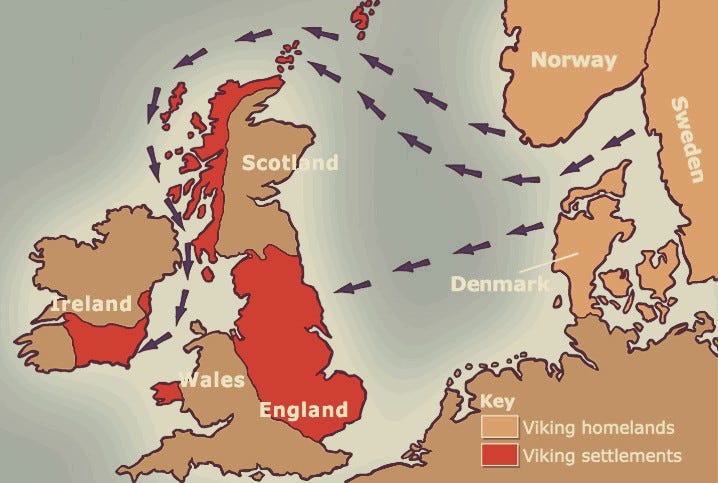
For example, we both speak Germanic languages and we have a shared history. There are plenty of words that stem from the time when the Vikings ruled your island, such as queen (kvinna = woman), or egg (ägg = egg), and hundreds more (a complete list is to be found here). Having descended from fairly Anglified parents – my mother through a slightly upper class style of porcelain, tea time and Roger Moore as a male role model, my father through music, rock, the progressive scene and football – I would probably say: it is very similar.
What is not similar are the enormous class divisions a Swede notices as an outsider looking at your country, and the way they are taken for granted: gated communities, an overwhelmingly car-centric society and a tacit assumption that people must simply take what they get. On the whole, there are more similarities than differences, largely because we grew up with your culture rather than you with ours. After all, how Swedish is Abba? It is more like the sort of music we imagined you would appreciate.
A brief explanation of this adaptability: Sweden is, in itself, an export nation, a small people who have grown wealthy on others’ consumption, so we have always needed to look outward; the Vikings even built cities in North Africa and Ukraine and returned with Roman coins (the Romans, of course, had no interest in our chilly climate, so they spared us). In the eighteenth century the French became the norm, we even imported one of Napoleon’s generals as our new king. In the twentieth century we first tried to imitate Germany, then the war came, so it became England, then the United States. Not the United States any longer, though. You can guess why.
I guess it’s time to follow our own path.
Chafic LaRochelle, Quebec, Canada:
Jörgen, how many languages do you know, and does it include Spanish and Portuguese?
I think I have a talent for a language without words, namely the ability to understand what people mean. I have sat in rooms where someone insults another person present, and I understand that it was clumsiness rather than malice, without anyone else realising it, and without the clumsy one even grasping that they have offended anyone. And then someone needs to mediate, and that someone is me. This gift also means I at times have to protect myself with many layers of emotional shields (if you relate: click).
I have also become competent at interpreting the expressions of my own body, what means what, how it can be resolved and what it stems from, instead of entangling myself in excessively overthought analyses. Another language I feel I command is speaking with children without hierarchies, which can be interpreted as childish, but which I see as the outcome of genuine curiosity. I generally do not care very much about ages and have always had friends from different generations. If one shares an interest or a disposition, that is enough for me.
But the question concerns spoken languages, and then the answer is Swedish, English, Norwegian, Danish (in writing), German (I am not very good at speaking it, but understand a great deal), a little Spanish, a microscopic amount of Portuguese (mostly through Spanish). I do not think I have any particular aptitude for languages other than Swedish, even if my English is finally beginning to resemble the language I use for thinking.
Mahnaz Hatami, Iran:
Could you please share the top 10 of people you admire?
The list of the best human beings of all time will have to wait for another dispatch (one I do not measure by achievement). For now, here is my top-one list of creative heroes:
Leonardo da Vinci
Leonardo da Vinci’s to-do lists are undeniably inspiring. Here is a small selection of seven especially telling items:
Observe the holes in the substance of the brain, where there are more of less of them.
Describe the tongue of the woodpecker and jaw of a crocodile.
Get the master of arithmetic to show you how to square a triangle
The rest is a list of people whose creativity and/or curiosity and/or passion and/or intelligence I admire, for one reason or another: Marcel Proust, Hildegard von Bingen, Brian Eno, Lina Wolff, Tyler Cowen, Blaise Pascal, Ana Carla Maza, Leonora Carrington, Karl Ove Knausgård, Roberto Bolaño, Jay-Jay Johanson, Alejandro Zambra, Gertrude Stein, Tadao Ando, Helle Helle, Willy Kyrklund, Masha Gessen, Tomas Tranströmer, Teju Cole, Charlie Kaufman, Marguerite Duras, Georgi Pinkhassov, Krzysztof Kieślowski. (Dear reader: Based on this, please give me advice on people I would like to follow from your own country and culture. I’m a bit Euro-centric, but I’m working on it.)
Lea Stankovic, Lisbon, Portugal:
What was the turning point for you on Substack?
Kevin Kelly’s idea that you only need 1,000 true fans was a slightly too seductive theory for those of us compelled to express ourselves in smaller languages. There may well be enough Swedish speakers willing to pay for make-up tips, training advice or detective novels, but perhaps not for surreal short stories. It is possible, of course, but it is naturally more difficult.
That I dared to switch to English was due to the fact that, with LLMs, I could have a linguistic coach by my side so that I would not make a fool of myself (note that I do not write with AI) (there is a post about that). It is not discussed all that much, but how this technology will affect the possibilities of communicating across language barriers is likely to become one of the great revolutions of the coming decades. And that is a good thing. What will it do to the position of native speakers of dominant languages? One can only guess.
Emerson peña salamanca, Bucaramanga, Colombia:
”In the tradition of Borges and Calvino, the narrator is often a collector of fragments from a larger reality. From your perspective as a collector of stories in a museum, do you believe that the modern writer is discovering a new story, or are we simply in the process of remembering, through our ‘bagatelles’, the structure of a truth that humanity once chose to forget?”
First, a confession. I am no expert on either Calvino or Borges. It was my loyal reader Lisa Maguire who, in her newsletter, used the following description of The Bagatelles: beguiling mini novels in the tradition of Borges and Calvino. Sometimes it is easier to be introduced by someone else, and I felt that line functioned as an exact set of directions, two coordinates leading the reader home.
For we do inhabit the same neighbourhood of literature, Borges, Calvino and I, without so very often knocking on one another’s doors (but I can see the similarities: the play with literature, the magical and the non-magical realism, the fondness for encyclopaedias, maps and psychogeography, for odd facts and history). We would surely have had quite a few animated debates at the local café. I therefore trust Lisa’s judgement here, even though I would most of all have preferred to move to another neighbourhood: Proust’s. Most of us strive to reach a place we are not already in, and that is true of me as well. My wish is to write with more passion than intellect, to extinguish thought and simply play it out, even if I do not often succeed. The kind of text I have visualised as an emotional room requires a degree of isolation I cannot quite afford at present.
That was a long introduction without coming any closer to the question, whether we who write invent or rediscover. It is of course both, but which should occupy the greater space? Let me put it like this: when I was on sick leave and could not listen to music with lyrics4, because it then contained too much information, I was nonetheless completely harmonious and calm within myself. In that moment I realised that I already had everything I needed to be happy. I required no external addition, rather the opposite: a silence that made possible another kind of hearing. Without claiming to know more than anyone else, Emerson, and based on that entirely life determining insight, I believe you are on to something with your question.
Igor, Waves of Meaning, São Paulo, Brazil:
”If you feel like writing, please comment on Brazil. Anything will do; it would be interesting to see what’s on your mind about my country.”
I have just met my neighbour in the street and spoken about your country. She had in fact just spent three months in South America, most of that time in Brazil, and I asked whether she might help me answer your question.
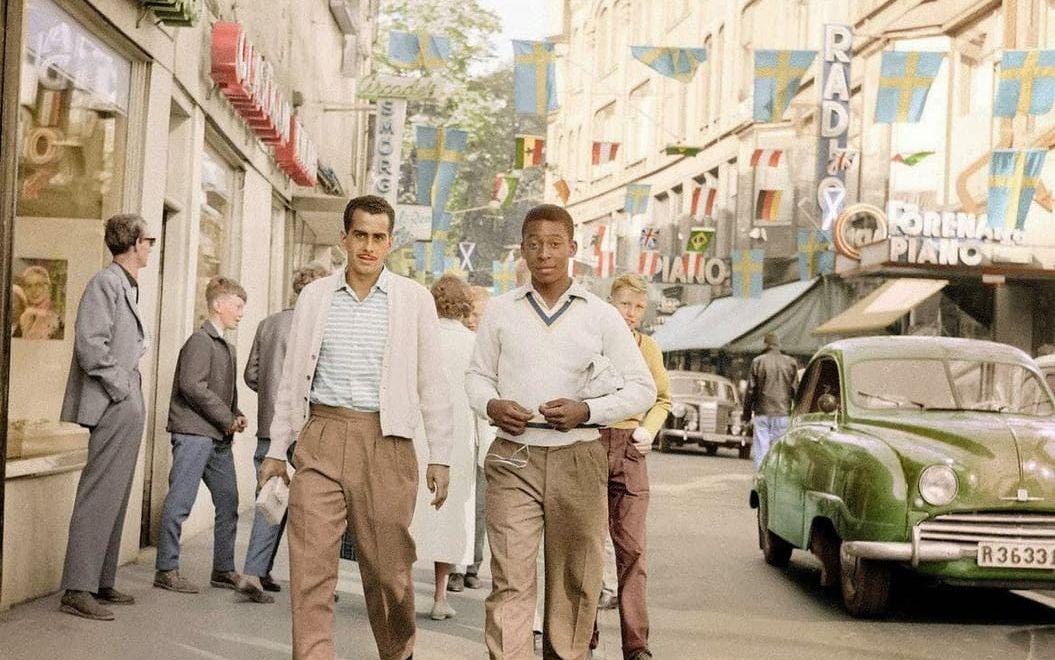
You may not know this, but we Swedes are in love with everything that is yours. I asked my son which country we view most positively and he answered as most people here would have done: Brazil. Why? It is not only about Pelé and the World Cup in Sweden in 1958, nor about the fact that we share blue and yellow in our flags, but about something larger, a self-image and a projection.
You are our opposite, or so we believe. When we feel cold and controlled we imagine you as warm and spontaneous. Here people are almost offended if addressed by a stranger, with you it is a social norm.
In any case my neighbour and I agreed that we would rather walk about in shorts and a T shirt than try to sustain a conversation on a Friday afternoon in many degrees below zero wrapped in several layers of clothing. Yet we sustained that conversation for twenty minutes, speaking about everything we are not, by doing precisely what we claim we do not do. Does that then mean we are not truly Swedish?
(This could lead to a longer line of thought about “people”, since “people” are never either you or the person standing in front of you, so who are they then?)
You asked for anything, Igor, and I believe that is exactly what you received here.
Thank you for reading.
– Jörgen Löwenfeldt ✦ jorgenlowenfeldt.se
This dispatch went out to readers across more than eighty countries. If it resonated with you, consider sharing it with a friend who might feel the same, leaving a comment, or recommending it on your own Substack.
A warm thank you to the sponsors of The Bagatelles. Your belief in my work keeps me going, and as a paid subscriber you have access to all long-form content, including the novel Zenopolis, all chapters of Naïveté Travels, and my work in progress: Bardo Noir.
Do you have any feedback, ideas, or questions you would like to ask? Click here.
To receive new posts and support my work, consider becoming a free or paid subscriber.
Two more summaries:
✦✧ Looking for the archive? You can find every post here.
1
There were of course more reasons.
2
Maybe you are wondering if you should start a newsletter of your own? I ask you: What do you really have to lose?
3
It’s really about the pattern of life, which in the case of ferns is so apparent. Mathematics you can touch: https://en.wikipedia.org/wiki/Barnsley_fern (more about the actual fern craze: https://en.wikipedia.org/wiki/Pteridomania)
4
It may sound as though I am exaggerating, but for a time it was entirely impossible. My mind was too cramped. I closed my eyes, lay in bed, and smiled. Read more here.
Keep reading
Essay 14 min
The Solitude Paradox
For months I have been searching for an opening to this essay. On walks and bus journeys, I have turned sentences over in my mind, only to discard them soon afterwards. One was…
Novel excerpt 18 min
The Last Siamese, chapter 1
In the autumn of 2007, naturally, none of what would later happen had yet happened. I was an intern on the culture desk at Norrköpings Tidningar, commuting weekly to the…