
Essay 34 min · Password required
The Art of the Diarist
When you do things in public, things happen that you could never have expected. You might say that surprises are, in principle, the only thing to be sure of. One such moment…

I ran a survey on Substack Notes: On a scale from 1 to 10, how do you feel about AI? 10 means super excited, 1 means: well, you know.
The average answer came out as -0.6 (yes, minus 0.6), and the median was 1. Not particularly high, to put it mildly. Personally, I would place myself around a seven. I am far too curious not to explore every possibility, and I find these thinking-machines useful for many tasks, such as translating large chunks of text (edited afterwards, of course), or helping a Swede feel secure when communicating with thousands of people in a foreign language.
My personal interest goes back a long way. For many years I was the director of Sweden’s Internet Museum, and in 2018 I wrote an entire novel about a physical conference organised by a chatbot (which might be published here eventually). Today I have an AI assistant that helps me remember things from my calendar and email, and like many people, I have high hopes for medical and scientific advances enabled by this technology.
But with that said, I do have my limits.
That line became clear to me the other day when I tested Spiral, an AI service marketed as having taste. That has been the issue with machine-written text, as you know. It is often generic and dead. Asking an AI to write poetry or tell a joke feels a bit like asking a rock to describe its feelings (whatever your take on panpsychism, I think we can agree you will probably not get a particularly vivid answer).
Spiral certainly wrote better than the other services. I could upload my text and receive suggestions for how to continue the story, and it also offered sensible feedback, absolutely on par with a human editor. It even generated ideas that I found genuinely useful. In theory, a perfectly valid use of AI in writing.
Still, a kind of void arose while I tested it, a feeling related to the one you get while searching for lost keys. I spent some time considering what happened there. Then I understood something that should have been obvious all along: writing, for me, has never been about achieving perfection. It is about being somewhere I can be fully myself. In fact, much of this I do not even want help from another human with. I want my fictional worlds to be completely mine.
I suspect we have reached a point in history when we will all need some kind of personal AI policy. We need to decide for ourselves: this part I am happy to get help with, but this part I keep to myself. My literary writing will therefore continue to be non-generic, prolix and, at times, a little too eccentric and too much. The result is very rarely optimised for any algorithm. But it is what it is. Because that is simply who I am.
Now that this has been said, here are three bagatelles about something else.
Welcome away ꩜
To receive new posts and support my work, consider becoming a free or paid subscriber.

There was a date. There was an eleventh of July 1983. Just a day, one of those we have all the time, the sort that begins with waking up, continues with a throng of well lubricated routines and ends with going to bed. The kind of day that comes and goes and which you do not realise is life. This day was more life than the others, she wrote to me in the letter I only read once I could no longer ask any follow-up questions.
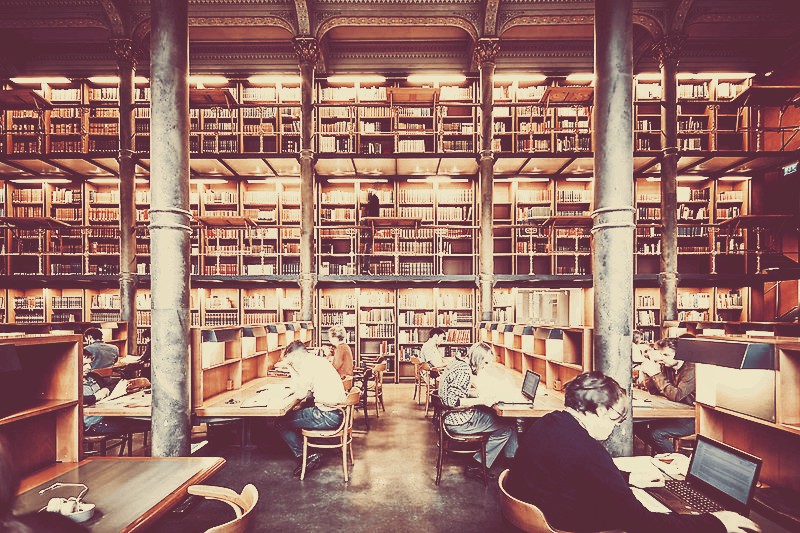
I spent a summer in the basement of the National Library among the microfilm screens and the bleary eyed, ploughing through newspapers. While the heat rolled over Stockholm we were fanned by cold air underground. Me and the others with so-called specific interests. We who had no joy of what was happening around us, who found ourselves in what had already happened, the static but undiscovered. Someone had become obsessed with Swedish spaghetti western films, another studied neoliberal tendencies on post-war editorial pages.
I myself read everything that happened on the eleventh of July 1983, since I had been given no more precise instructions than that. The date that was supposed to explain everything that later took place. The emigration. The attacks. The withering.
When I had coffee with one of the others, a bald doctoral student with an odour, who was already in his fifth year, he jokingly called me the National Library’s Bill Murray, after the Groundhog Day actor who never got anywhere in the calendar. For just like him I had become stuck in time, brooding over that Monday more than forty years ago as if every small notice could be read like Kremlinology.
There was nothing particularly special about that day really apart from one thing, which revealed itself at the first search. Some sort of heat record was broken then, 34.2 degrees Celsius, which was not surpassed until 13 July 1994 when the fire brigade sprayed the bridge to Nacka so that it would not swell in the heat. It was a clue of some sort, but to what?
Some days I spent hours on minutiae, articles about interest-rate changes or prisoner exchanges between Israel and Egypt, since they evoked a vague sense of importance. Somewhere in the mass of the eleventh of July 1983 I would find my way. Perhaps in the local newspaper Hallandsposten. Or in Sydsvenska Dagbladet. Possibly in Norrbottenskuriren. A key to the soul that only someone who knew how to search would uncover. In the endless mass of text she was there.
Or not, but what choice did I have but to search? It was not as if I had anything more important to do, neither now nor later. I would not get some summer warehouse job anyway and the inheritance would be enough to cover the rent for at least a year to come.
When I returned home in the evenings to her flat on Torsgatan, I drew all the curtains and pushed one of the VHS tapes into the player. Casablanca, Nils Poppe and Pinocchio. I let my mind be flooded by impressions so as not to get entirely stuck in that damned date.
What had I even done then? I kept no diary at the time. It was probably summer holidays. We were no doubt away somewhere, perhaps Greece again, or Mallorca, possibly Lanzarote. Delving into my memory yielded nothing. For me, the eleventh of July 1983 had been a nothing while waiting to become an everything. If only I had known. I would have taken notes, studied every minute with great seriousness, not allowing any detail to be lost. At the same time, I was a child. How are children? Children are carefree. They believe they will be granted new dates in eternity, even though they themselves live closer to non-existence than the adult, having only recently come from an eternity without dates. Still they stroll straight into lifetime and believe themselves the owners of it.
And then came afterwards, when I spent every waking hour leafing through the entertainment news in Borås Tidning to see if that interview with the revue actress might contain some valuable statement, or looked again at the templated TV schedule, but I had not yet examined it in Dalademokraten, there could be a glitch somewhere so to speak, but there never was. It was always the same programmes. The same time for Aktuellt. The same for Rapport. The same for Teknikmagasinet and the same for Landet runt. On the radio the news echoed through the schedule, interspersed with classical mornings, the land and sea forecast.
At night I began to dream of the programmes. It was as if I was there again on the leather sofa, as if I remembered what I could not remember.
August and September arrived. The weather turned, hard. It rained without pause and with infinite patience, said those who paid attention to such things. Newcomers who tried to make small talk with us in the basement, who sat down dripping wet in front of the projectors and thought it was some sort of social gathering, when all we did here was study what had come and gone to understand what had stuck between the lines. There was no such thing as bad weather, I wanted to say, but that would have prolonged the discussion. Better to let everything said hang in the air as if it had never been spoken.
I had moved on to the horoscopes now, thinking there might be something there. There had been nothing on the letters pages, nor among the sports results, neither had the comic strips given any indication (I was so tired of Beetle Bailey and Hägar the Horrible), and certainly not the classified ads (in which I had great expectations), but there could absolutely be something in the sign of Cancer, I assumed.
It said in Norrköpings Tidningar:
“The charm and energy you radiate today will affect everyone around you. A certain person may take a longed-for initiative.”
It probably meant nothing, since the other star signs described similar destinies, but it was at least something. I photographed the text and placed it in my folder of potential findings. Among these was the notice about the missing child in Flen (who goes missing in Flen?), the feature from the shelter in Uppsala (where one of the residents had previously worked as a priest) and the weather forecast showing sub-zero temperatures in Bohuslän (an obvious misprint, surely?). The idea was that I would go through everything at a later point, in order to possibly find a hidden pattern in the eleventh of July 1983.
Then it struck me, like a eureka moment: what happened on the eleventh would surely have been written about on the twelfth or thirteenth. A cold shiver of shame ran through me, followed by a feeling that could only be likened to pure joy.
I spent the rest of the autumn on the dates that followed, at first elated by my insight, but then increasingly disheartened that these newspaper days in many ways resembled the others, only with different names and portraits. An endless suite of everyday life. There was still drought in the bilberry shrubs outside Piteå and the bank robbery in Östersund was still unsolved, but at least I was moving forward, if only a couple of days, but it was a decisive change, I thought.
Just like Bill Murray in the movie I finally moved on with life, and it certainly felt as if I had a different shimmer in my gaze when I caught it in the mirror on my way down into the mine. Like a person who had found, or at least had a clear direction towards, the future. Someone who was on their way somewhere. Right? Was that not so?
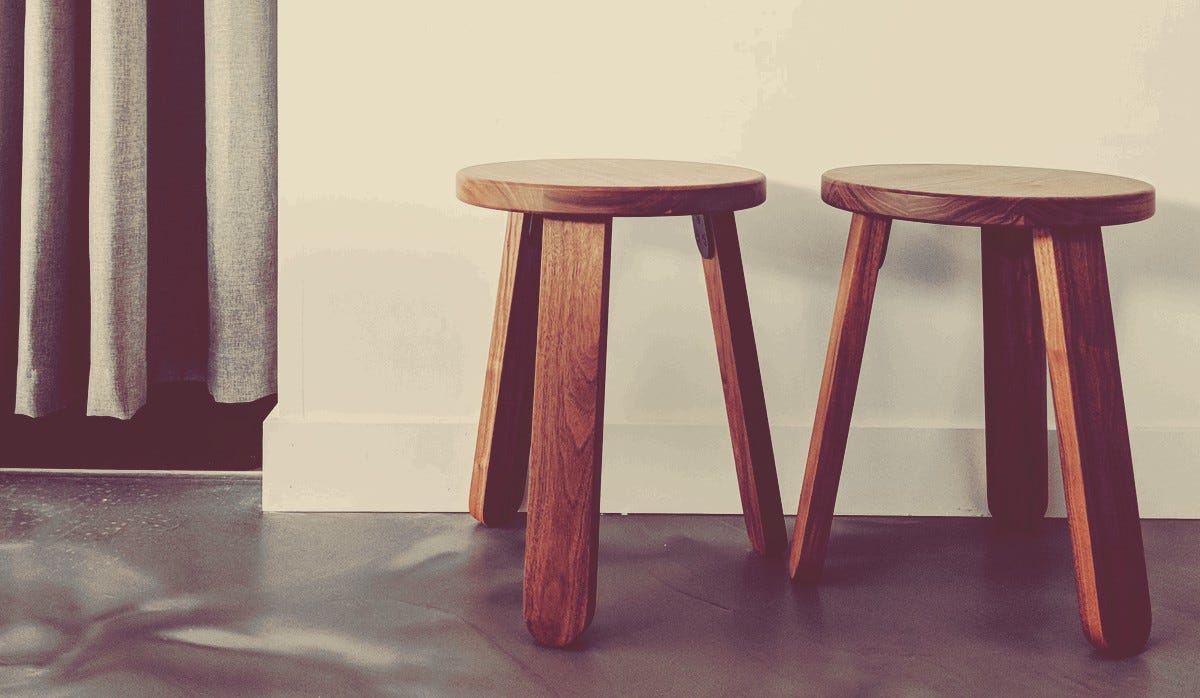
The boat-building course had only been running for a few weeks and they had not got any further than making stools, a craft that had caused her to fall into a kind of stool psychosis. It was not difficult to detect this when visiting her flat, where dozens of seemingly identical chairs without backs were scattered across the floor, as if she were searching for a seat with the perfect view, without ever managing to find it.
Yes, do sit down, she said a little apologetically and I understood that it was something of a test, that it would say something about me if I were, for example, to choose a corner or sit in the middle of the room, with all the stools surrounding me, almost like an invitation to be invaded.
I needed to calculate my decision a little and when I hesitated for too long she said: So, you are one of those who stand, I would not have thought that of you. Since her voice had an impressed tone to it I chose to remain standing. She herself sat down on the third stool from the left counting from the doorway, with her back to the wall, while I remained where I was, now with my weight more focused on one leg. It is all right if I sit, is it, she asked. Yes, of course, I lied.
Then only silence. A ticking under the temples. Her gaze. My body. Her gaze. This was not at all what I had imagined. Enough, I roared, walked towards the hall and said, almost as irritated: Goodbye. She came towards me with a smile and stated bluntly: Not even a minute, that will not get you far.
How does it feel if I press here, the masseuse asked, bringing her little fingers together against the back of my head in a needle-like grip. It does not feel like anything in particular, I thought I would reply, but at that very moment a memory fluttered past of a cherry blossom strewn cockpit I had never visited, except in a dream.
The masseuse shifted her grip and pressed her index fingers against each temple whereupon a new dream emerged, a languid marathon under water, the experience wrapped in the same gauze as a memory. This continued again and again during the session, but I said nothing about it to the kneader of muscles, since it would have sounded deranged. I simply noted the peculiarity of what I had experienced and paid.
On the way home I continued to be shaken by dream memories. As soon as I sat in a new position in the metro earlier mist shrouded scenes were brought to life, as if the masseuse had accidentally touched a switch that had disturbed the order within me. It seemed as if every dream I had ever had was documented in a parallel secret archive, which I had now gained access to by mistake.
In a way it was a form of wealth, but also a curse. Hundreds, perhaps thousands, of experiences I had only lived through while sleeping flashed before me while I tried to do my work, fold laundry or empty the litter tray. Every association from the open archive had a counter association in the hidden one, a relationship that soon caused feedback.
To stop the attacks I needed to close my eyes, which at least reduced the amount of impressions. Was it really that important? I thought in the darkness in order to calm myself down. Everything that takes place within a self is internal experience anyway. What is based on an external impression is processed and reshaped. An inner exterior or an exterior exterior was a simple thing to confuse. Of course the brain would struggle with the sorting after a period of excessive stress.
If I could just sleep properly everything would surely fall into place again, I thought and collected the prescription sleeping tablets I had refrained from using out of fear of developing a new addiction. That evening I took one pill extra to make sure I was truly knocked out, and in a chemical way turn the switch back again.
When I woke after certainly an entire day’s absence the sheet was drenched and knotted like a liana. There was a sharp ache at the back of my head, almost as if I had been forced through, so perhaps I had succeeded after all. I half-ran to the bathroom to see myself in the mirror, but was soon disappointed. In front of me there was still the same inverted face, with the eyes turned inwards.
Thank you for reading.
– Jörgen Löwenfeldt ✦ jorgenlowenfeldt.se
This dispatch went out to 1,207 readers across 69 countries. If it resonated with you, consider sharing it with a friend who might feel the same, leaving a comment, or recommending it on your own Substack.
A warm thank you to the 14 sponsors of The Bagatelles (welcome, Sal and Markus!). Your belief in my work keeps me going, and as a paid subscriber you have access to all long-form content, including the novel Zenopolis, all chapters of Naïveté Travels, and my work in progress: Bardo Noir.
To receive new posts and support my work, consider becoming a free or paid subscriber.
Maybe you'd appreciate this:
✦✧ Looking for the archive? You can find every post here.
When you do things in public, things happen that you could never have expected. You might say that surprises are, in principle, the only thing to be sure of. One such moment…
Already as I receive the email, I get a sense that something is off. The signature is set in an italic, hard-to-read typeface, and the sender uses a language I find overly…