Bagatelle 6 min
Pluto and Mercury
It is a day in May when half of the flâneurs are wearing scarves and the other half have rolled up their shirt sleeves. Some of those hungry for summer have gathered on the long…

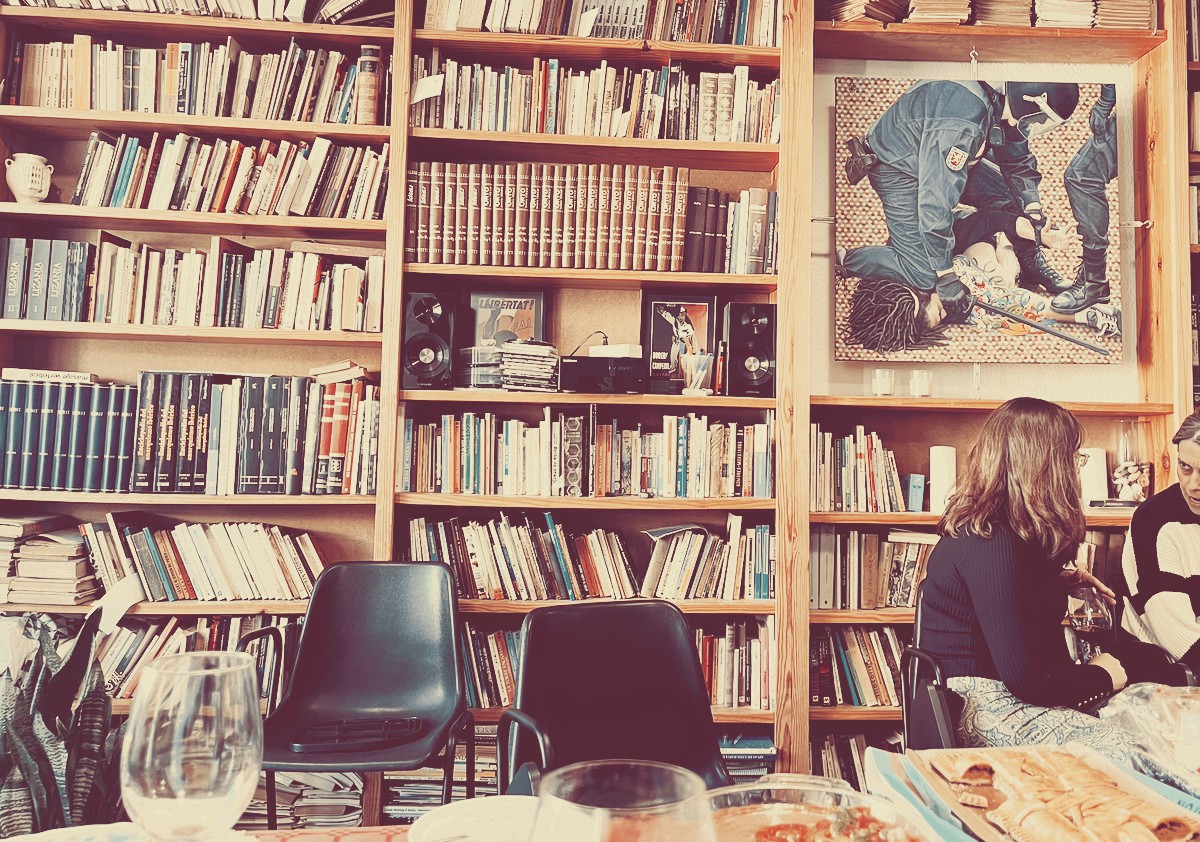
At the syndicalist party, I was one of only two English speakers, and he soon got bored of me. Since my only viable conversation partner also spoke the local language, he quickly found Spanish-speaking friends, while I shuffled through the crowd exchanging awkward glances that said, “Well, what can you do?”, like that shrugging emoji.
My presence soon became a source of stress for the others, who liked to see themselves as internationalists and now had to make an effort not to reveal that their antisocial behaviour wasn’t due to xenophobia but simple shyness. The terror that one of their comrades might overhear their hesitant attempts to engage me. I could sense all of this, so I figured I’d better busy myself however I could.
Silently devouring tapas lasted only five minutes, and I didn’t want to come across as either a drunk or a phone addict. So, stationed at the fringe of the party, I began examining each poster as if I were touring the Prado Museum with a secret audio guide. I studied the May Day brochures at the entrance like they were someone’s posthumous writings, discovered a misplaced wooden pitchfork in the umbrella stand, earning myself thirty seconds, before turning toward the bookcase lining the long wall of the room, shelves straining under the weight of books.
I’d already explored the meeting room and the kitchenette, and I understood this was where I’d have to make a discovery, just enough to occupy myself so the others could continue partying without having to account for my increasingly agonising safari through the land of wordlessness.
The shelves held classroom sets of textbooks, outdated encyclopedias, assorted tomes on property ownership and union work. Someone’s CD collection too, mostly local flamenco rock. Scattered throughout were novels, magazines with faded covers, and poetry collections. Some Machado and some Nakens, a bit of Lorca.
It wouldn’t be long before the partygoers realized I was wandering around pretending to read, like a child mimicking any language with enthusiastic conviction. Si, por favor, el madre. Best to find something fast.
The whole experience reminded me of that time in Japan in 2002 when I hadn’t seen my own alphabet in two weeks, and I devoured every snippet in the International Herald Tribune the moment I got hold of a copy. That thought bought me another minute and a half, but this time-nibbling approach wouldn’t hold much longer.
I was just about to give up and retreat to the bathroom for an extended visit when I spotted a small, handwritten booklet tucked between two identical manuals for a VCR. I understood even less of this than anything else. The letters looked like code. Dots placed over reversed characters. Lines piercing through U’s and W’s. N and B fused together. Some letters tilted at 45-degree angles. Even the symbols were new, tiny constellations of important scribble.
These lines of poetry, which seemed to follow haiku logic, interested me more than Lorca’s Spanish phrases, and I felt I had time to try decoding them. Pleased with my find, I brought the booklet to the armchair next to the printer, moved as if I were someone with a higher calling, and flipped through the pages with a naïve hope that I might suddenly be struck by total insight into this new language. That a trapdoor in my psyche would swing open, flooding me with previously hidden knowledge, like a fully written play awaiting its premiere.
For another full minute, I pretended to believe this. By that point, I had left the party’s periphery altogether. I wasn’t even present anymore. The people around me couldn’t see me, and I couldn’t see them. Maybe they’d moved on to sabering champagne bottles on the balcony, or were watching the much-anticipated short film premiering later in the conference room. Or maybe they were just still chatting, same as before.
I couldn’t tell anymore. My focus was absolute. I might as well have been on a meditation retreat on the far side of the moon, or in my bed at home, blinds drawn tight, earplugs screwed in. There was something almost erotic about the letters of this language, which I imagined could only be read by one person in the world. I pictured it having been invented by a young girl, to keep her mother from reading her diary. And the knowledge had stayed useful well into adulthood, when the language became her go-to for anything private. Like a habit no one had thought to break.
Maybe this short poem, in five-seven-five syllables, expressed unrequited love for a colleague—something she printed so he could keep the words close without understanding them. Like a spell. The papers were yellowed enough that the girl was surely more crone than woman by now.
I raised my eyes and scanned the clusters of people leaning in toward one another. Men, women, girls, guys, idealists and significant others. Some with unruly hair, others bald. Some tattooed, others dressed like lawyers.
Which of these three silver-haired women, yes, three, had written this? I focused on them in turn, waiting for someone to flinch at the sight of me with the booklet in my lap. Of course she would reveal herself the moment she saw me. A shiver of recognition, too deep for anyone to hide. Only, no one was looking my way. By now I had been collectively forgotten.
That’s when I heard a sound from the hallway, a murmur of words and sentences that were suddenly comprehensible. Like I’d been rudely yanked from the jungle of dreams. A “Sorry I’m late,” in a thick Cockney accent was my alarm bell.
And then, like a long-overdue babysitter, the polyglot private tutor from Bristol strode my way, gave me a firm handshake and asked, “What are you reading, mate?”
I snapped the booklet shut, returned it quickly to its place between the VCR manuals. as if I’d just finished Jumanji and couldn’t explain, even if I’d wanted to, and said as casually as I could:
“Oh, it was nothing. Nothing at all.”
It is a day in May when half of the flâneurs are wearing scarves and the other half have rolled up their shirt sleeves. Some of those hungry for summer have gathered on the long…
I was assigned to write the text because I was considered the one among us who could handle the craft, a matter of linguistic talent, an ability to round off sentences, begin them…
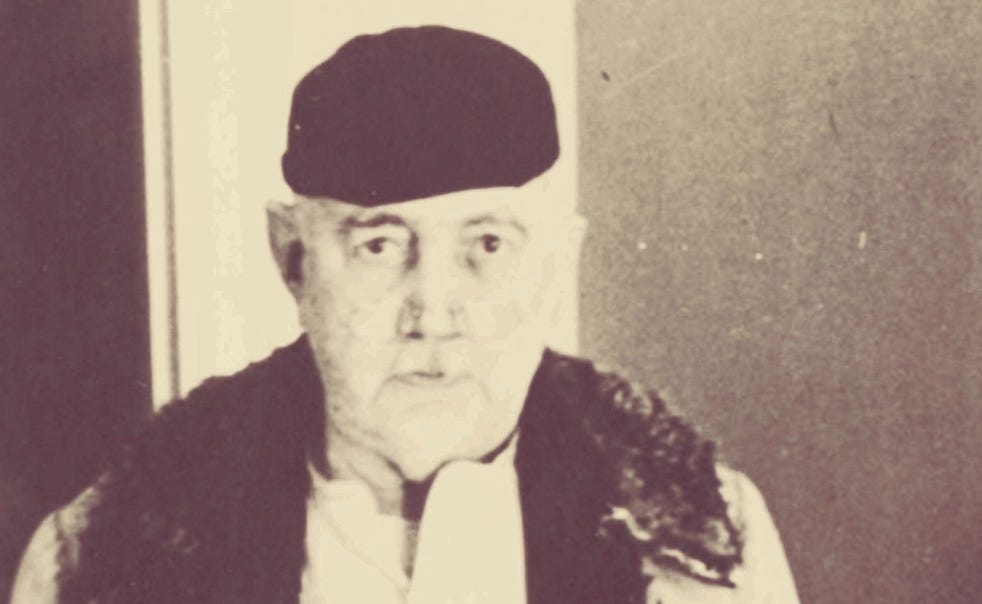
At St Lars Psychiatric Hospital in Lund, between 1909 and 1944, a baron named Eric Hermelin sat and translated Persian poetry. He had lived a drifting life, in service of everyone…