

Essay 23 min
The Unfolding of The Bagatelles
Building up pressure can be a good thing and, if you need a recipe, try being a young first-time parent, never sleeping well, working constantly with other people’s demands, and…

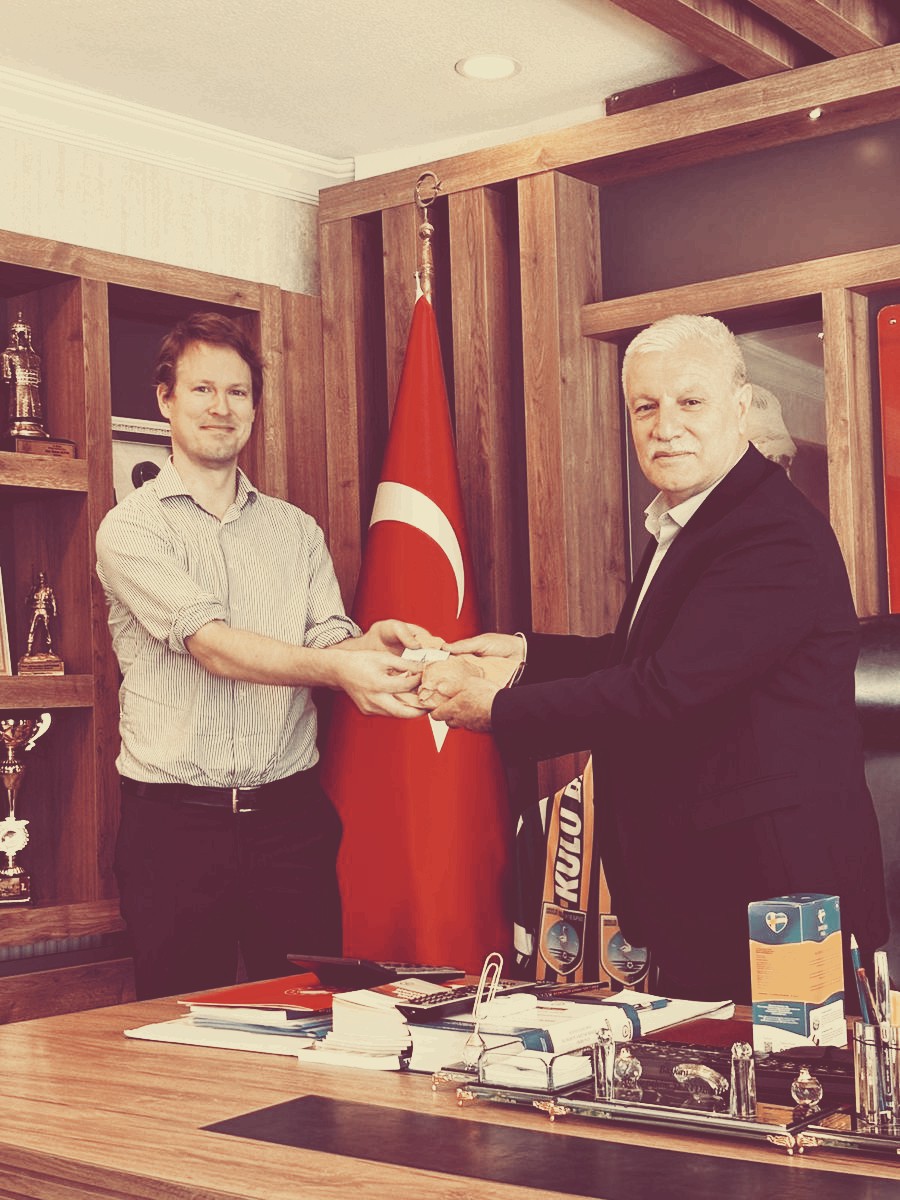
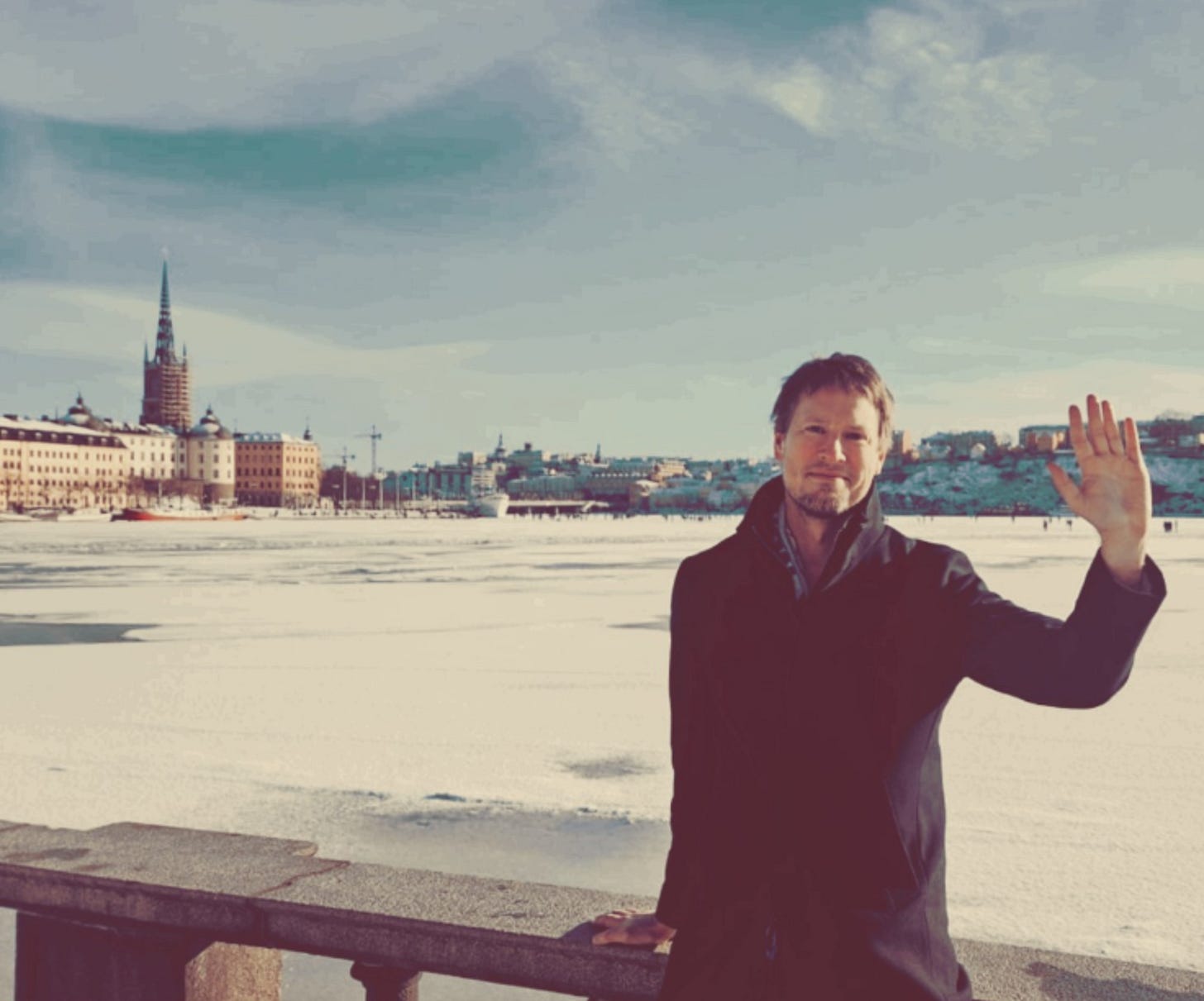
I have been travelling lately, being greeted by a mayor in Kulu, Turkey, celebrating the memory of Ola in Norrköping, Sweden, and scouting football players in Turku, Finland. Just a few days ago, I went to spring-lit Uppsala and, together with my colleagues, received an award for the project Nordic Days and Nights.
Busy, exhilarating weeks.
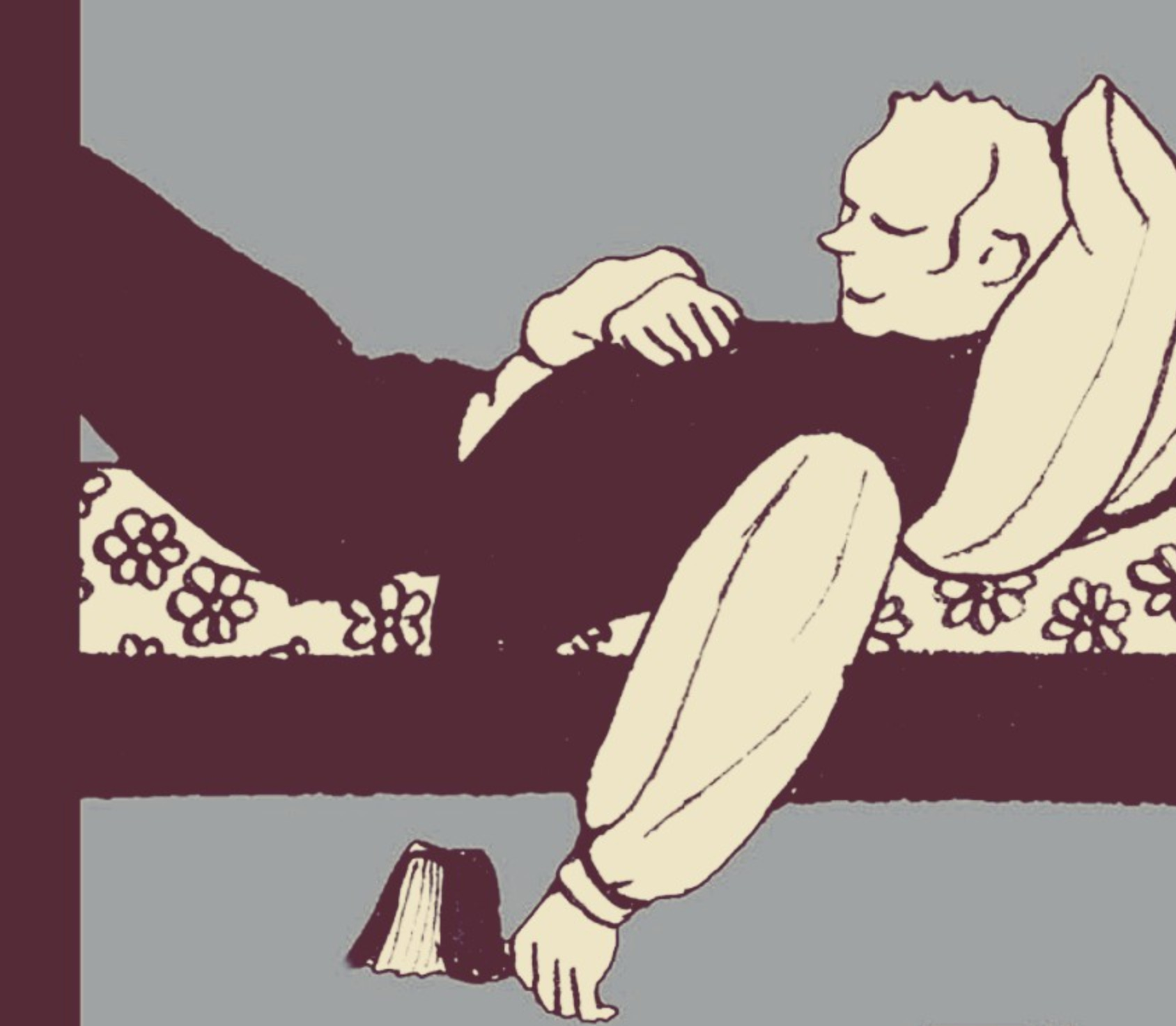
However, you do not have to move in order to travel. Readers of The Bagatelles are already well aware of this, as I offer up to three escape routes with every dispatch. And attentive readers may recall my earlier mention of the French author Xavier de Maistre, who wrote Voyage autour de ma chambre (A Journey Around My Room) after being placed under house arrest for forty-two days following a duel. The book became an inversion of the adventure novel, where the bed, the armchair, and the paintings served as destinations and sites for contemplation. In doing so, he established a tradition of adventure as an inner movement.
So even though the body needs to move now and then, this newsletter is a place for the heirs of Xavier de Maistre. This dispatch is no exception. We are heading to Plaza de la Alfalfa in Seville, to what might be a moss garden in Kyoto, and to an unknown terrace by the Mediterranean, all without even putting on our shoes.
Welcome away ꩜


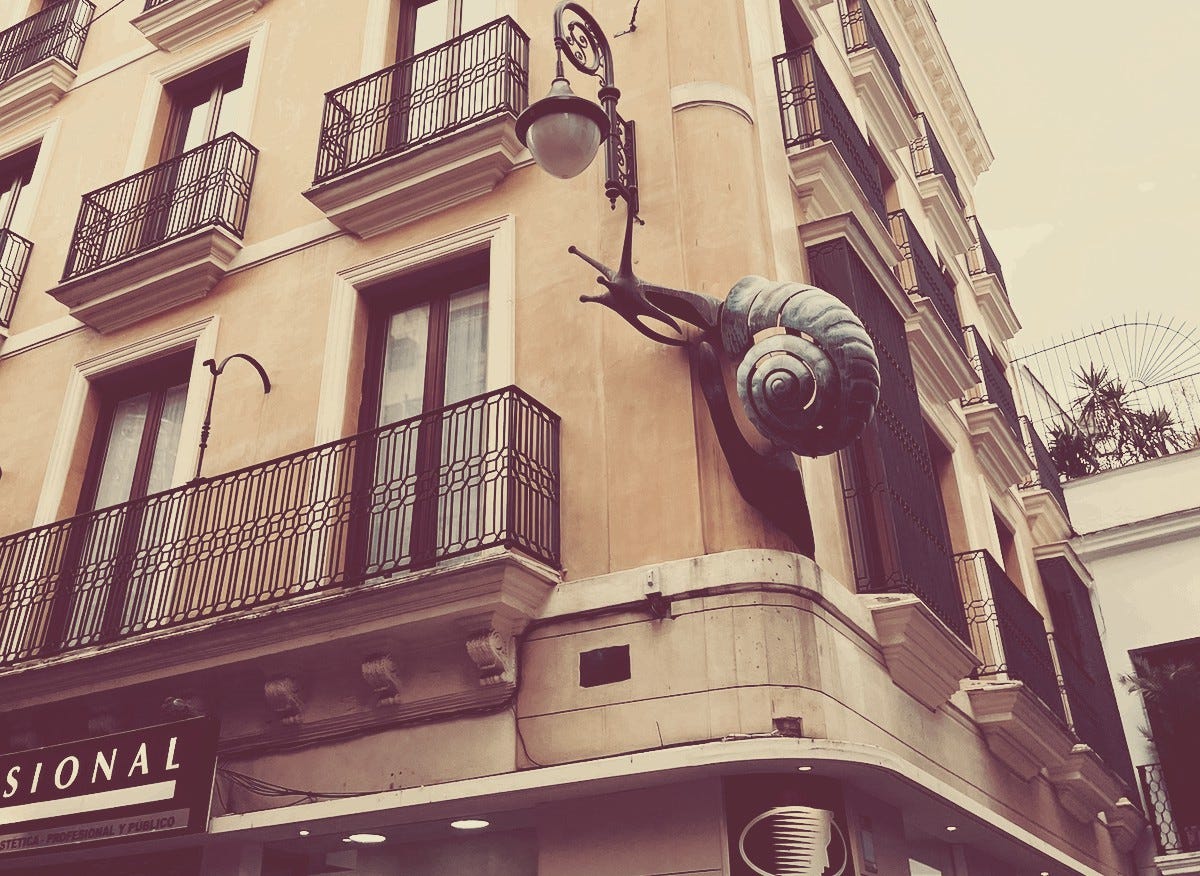
“It looks like a pegboard,” the child says about the sea of sunflowers in the newspaper, and the father looks up and looks down, examining the print’s screen of differently coloured dots.
With a more attentive gaze, the father begins to study the other articles fanned out across the table. Here it is claimed that Argentina has the most psychotherapists per capita in the world. There that ambidexterity is the ability to write with both hands at once. In the news briefs that computers have discovered that men and women have different retinas.
But of course this does not happen. Newspapers do not write about such things.
Yet let us imagine that they do, as darkness falls over Alfalfa, as the cup is drained of cappuccino, as three hundred and forty-seven breaths are taken unnoticed, as the waiter discreetly picks olives up from the floor, and the caffeine rises towards the brain like a suddenly returning personality.
And as it is time to leave.
Then she appears, in the middle of Plaza de la Alfalfa, the one who spoke about working at the checkout during the pandemic, in connection with the horror film Smile. It was connected in that behind the face mask she learned to smile in new ways. In the film without involving the eyes. In reality without the mouth. Quite troublesome, she said, but something that could be practised.
So let us believe that she appeared in the square with her picnic basket filled with artichokes and marmalade and began to talk about her Moroccan parents and her Catholic girls’ school and the ten years without citizenship and about the friend who works at the bar behind Las Setas: perhaps you would like to come along?
The child is given a Sprite. The father a draught cerveza. They pay for everything. This is not happening, yet it might have happened, we imagine. What is true, however, is that evening becomes night, and that towards five in the morning they head to the airport with a group of friends from Triana to sit in the arrivals hall. They watch people. People do not look back. They simply reunite and are absorbed in that.
But what really happens is that the father stares at the sea of sunflowers in the newspaper and mutters something inaudible, because in truth he has seen nothing. Or not even that. Not even that happened.
Contribute $5/month, or $2.50/month with the annual option. Your support helps me keep writing and publishing independently. As a thank you, patrons also get access to all my long-form writing, including complete novels.
Become a paid subscriber ↗Inspired by the garden of Saihoji Temple, I chose to tear up the wall-to-wall carpet and replace it with moss. The process was simple: equal parts clay, sand and soil spread across the floor, then a sprinkling from the moss cocktail I had bought online, water, and wait. In Japanese tradition, moss symbolises eternity and harmony. Look out over Kyoto’s vivid green coverings, closing tightly around trunks and gravel paths, and you understand. The moss itself is a detailed piece of nature for those who look closely: stars, spirals and triangles, like small galaxies.
A few weeks after the initial phase of the project, the growth had begun to push across the floor. A few more weeks later, there were hardly any surfaces left uncovered, and at last I could place my feet against the reassuring living ground as I rose from bed in the mornings.
Soon the vegetation worked its way up the walls and across the ceiling. Other forms of existence also began to make themselves known. Spiders and woodlice, of course, but also mice and frogs, deer and elk. In the kitchen lay a cluster of boulders, which at night might transform into trolls, or not, everything was still possible and impossible.
The entire flat soon brought to mind the forest I roamed as a child, where I could get lost without ever being gone, because nature was always home. As then, I wandered further and deeper in, found streams and marshland, ravines and clearings. Not a step was taken without noticing the softly tickling organism that lived beneath the soles of my feet. An unending massage, a reminder that I was moving in the right direction.
When one morning I spoke Japanese, I was not surprised, though that might have seemed natural given I had never practised the language before. I was simply in such a phase now, and besides I had other things on my mind, as I had misplaced my rake. Maple leaves covered the living room floor, and I was expecting guests.
In Italian, the word tempo is used for both weather and time. A compromise for everything that lies beyond our control, yet remains within reach in the long run.
She said, and stubbed out her cigarette against the window ledge.
The view from the balcony was uninterrupted. On a clear day we could see Corsica and, with a little squinting, all the way to Sardinia, but most of the time violent winds drove in here, against the house whose façade was so porous that after every storm I checked whether the plaster was still in place.
The wind is a metaphor for breathing, she said, and ran her pen across a few newly written lines, which I glanced through, and I was probably meant to say something now, though it hardly mattered since she did not trust my judgement, but I needed to say something out of politeness:
Interesting, almost animated.
She drew a fresh cigarette from the packet, cupped one hand around it and held the lighter long enough for the flame to catch. She inhaled deeply and then exhaled. A heavy cloud of smoke formed, quickly swirling away over the Mediterranean. At times her mood followed the ebb and flow, and I had the sense that she was at high tide just now.
Good, she said in reply and took another drag. You should do the washing up now, shouldn’t you?
When night came, I could still see the small cone of light swaying in front of the view. The wind scattered sparks against the window. Her outline could not be distinguished from the night. And I attended to my puzzle, as always. It was all an insignificant episode among the many from that time, simply the one I remember.
Thank you for reading.
– Jörgen Löwenfeldt ✦ jorgenlowenfeldt.se
This dispatch went out to readers across more than ninety countries. If it resonated with you, consider sharing it with a friend who might feel the same, leaving a comment, or recommending it on your own Substack.
A warm thank you to the sponsors of The Bagatelles. Your belief in my work keeps me going, and as a paid subscriber you have access to all long-form content, including the novel Zenopolis, all chapters of Naïveté Travels, and the first season of Bardo Noir.
Do you have any feedback, ideas, or questions? I answer selected questions in dedicated Q&A dispatches: Send them through this form.
To receive new posts and support my work, consider becoming a free or paid subscriber.
3x3 Bagatelles:
✦✧ Looking for the archive? You can find every post here.
Building up pressure can be a good thing and, if you need a recipe, try being a young first-time parent, never sleeping well, working constantly with other people’s demands, and…
When you do things in public, things happen that you could never have expected. You might say that surprises are, in principle, the only thing to be sure of. One such moment…