
The most common* dream in every country. Part of my research** for the museum’s dream-collecting project.
What is your most common dream?
* Googled.
** I haven’t put together this map myself, see details in the picture.

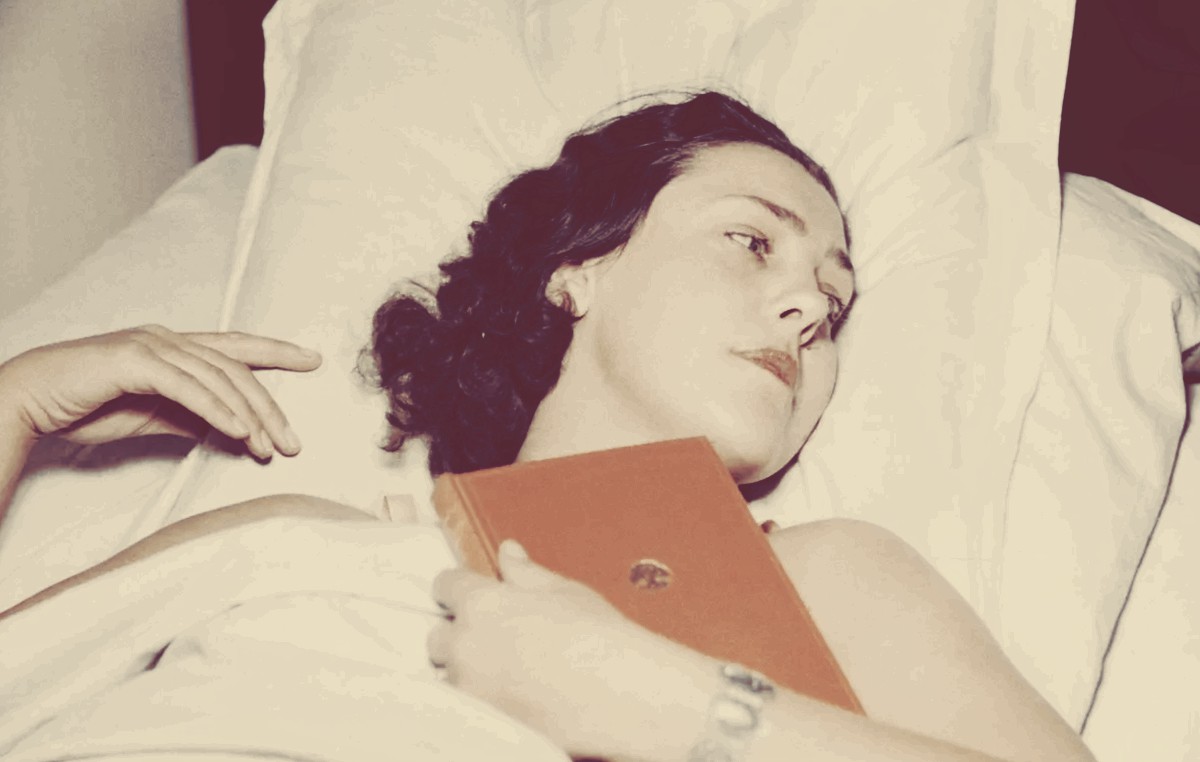
Recently I dreamt that I was out at my country house on Ingarö. It was summer and I was meant to look after a small child of about two years old. Myself. It was a very peaceful moment we shared, and I took good care of me, including the attention required when changing diapers. The strange thing was how natural it all felt, even after waking up.
How do you interpret this? Surely you feel that you know me a little better now?
And yet there are those who claim that listening to people talk about their dreams is the most boring thing there is. This may apply to certain dream scenes in fiction, but the real ones can say a great deal about the person telling them. A shortcut into someone’s inner life, especially fascinating if that person otherwise does not talk much about it.
As you may know, I work at the Nordic Museum in Stockholm on contemporary collecting projects. Our museum focuses on everyday life, and my job is to gather stories from the present to preserve for the future.
Starting now, we are collecting people’s dreams and stories about sleep. We believe they say a great deal about our time. Just as Charlotte Beradt discovered when she collected dreams in the Third Reich, when people were afraid of being exposed (even while asleep!), or as Deirdre Barrett observed during the pandemic, when people dreamt unusually often about insects. Similar patterns of political imagery can be seen in a recent collection of Russian dreams during the invasion of Ukraine, with Putin suddenly beginning to appear.
Nevertheless, dreams today are often treated merely as a meaningless by-product of sleep, with some notable exceptions, such as the Brazilian neuroscientist Sidarta Ribeiro. As you know there have been periods when they were given far greater attention. Freud was particularly significant here, whose focus on the narratives of the night surely inspired the researchers who, between 1920 and 1963, collected dreams, life histories and psychological test results from around the world for a vast database, in the project Microcard Publications of Primary Records in Culture and Personality. Anthropologists lived among Indigenous communities solely in order to ask, each morning, what people had been occupied with during the night.
The collection is now practically inaccessible, as the material was stored on what are today virtually unreadable microcards, despite the fact that the researchers held remarkably forward-looking ideas about how humanity might one day handle vast quantities of data. If you are curious, you can read more about this online in Database of Dreams (there is also a new database, not connected to the microcard version, containing 44,556 searchable dreams).
The stories of the night not only differ between years and dates, but also between countries and cultures, something visualised by the map below, and also noted in the latest issue of The Substack Post. (The data here).
The most common* dream in every country. Part of my research** for the museum’s dream-collecting project.
What is your most common dream?
* Googled.
** I haven’t put together this map myself, see details in the picture.
For almost a year now, my museum has been collecting days, through more than 5,000 diary entries. It will be exciting to complement them with the nights. Quite fittingly, we call this project Nordic Days and Nights, Nordiska dagar och nätter in Swedish. It could be the title of a collection of poems, and it is not far from what we want to achieve here: to go deep into emotions and lived reality, into what really matters.
If you found this interesting, here are three important links:
If you live in a Nordic country and would like to share stories about your dreams and your sleeping habits, here is the form (in Swedish).
Would you like to read more about the project? You can do so here (Swedish/English).
See a map of days and nights already collected (and published).
This issue also contains five shorter bagatelles, about alarm clock chimes with Pavlovian qualities, precise Japanese words, black-and-white memory displays, and quite a bit more.
Welcome away ꩜
Jörgen Löwenfeldt


Nemimi in Japanese is a word for what is heard by the one who is asleep, to be distinguished from what is heard by the one who is awake. She had found it in a list of unique concepts in different languages, alongside the Portuguese toadeira, a harpooned whale that continues to howl, and the Turkish mihrap, a beautiful woman who is no longer young.
She used to turn towards his nemimi.
When he had wrapped himself tighter in the duvet in his sleep and she woke with her feet left uncovered, she would sometimes take the opportunity to speak. When awake, he only wanted to be together, only to cuddle, only to have someone to ruminate with. His waking ears were given to someone else, his day friends, but his sleeping hearing was hers.
With it she could talk about her childhood, so softly that the voice was almost only audible within herself. About how, at the age of six, she went alone to the sett to lure out the badger. With a greasy chicken wing between her fingers, the plan was to entice the animal all the way home to the cabin and lock it in the cellar. The badger had probably already gone into hibernation, and dusk transformed the forest, she could not find her way back, volunteers formed a search party and she ended up in the newspaper, but she never told the truth.
Until now.
Another time she had been offered painkillers by a friend at a party, but the pills turned out to be fentanyl. A joke that ended with her spending a week in hospital. Then she complained of gastritis and a splitting headache and perhaps depression even, but the doctors found nothing unhealthy and eventually she was discharged. She told his nemimi about this too, when she was truly certain that the ears were asleep.
The months passed and she found herself on several occasions waking with bare feet. She grew ever bolder in her confessions, describing how she sent a report of concern to social services about a colleague, or how she used to steal Nespresso capsules from the community hall, as a protest against the board. Not even when she set out her detailed murder plan against her enemy from upper secondary school did he show the slightest sign of life. He simply slept sweetly and stupidly through the nights.
In the mornings she nonetheless felt consistently better, as if cleansed by her nocturnal confessing, and could more easily play the happy wife and brew coffee and toast bread, and listen to his detailed accounts of his dreams. One time he had found a goldfish in the closed ecosystem, another time he had copied the telephone directory for a client. Good heavens, how exhausting, my dear, she had said to his waking ears, and even then he had not heard what she said, for by then he was already deeply absorbed in the morning paper.
Contribute $5/month, or $2.50/month with the annual option. Your support helps me keep writing and publishing independently. As a thank you, patrons also get access to all my long-form writing, including complete novels.
Become a paid subscriber ↗I dreamt that I stepped off an airport coach and was met by a wall of high summer heat. The air was hard to breathe, as if it lodged in my lungs and did not come back out. My hair sticky, the strands clumped together like dreads. Then I woke on a January night, in dense darkness. The newspaper delivery boy slammed the front door shut after completing his round. By then I would usually try to fall back asleep for a few hours, only to realise in the end that it would not work. I got up, wrapped the quilt around my body like a mummy, went into the kitchen and opened the freezer, closed my eyes and thought: Svalbard.
The study of dreams is particularly difficult, for we cannot examine dreams directly, we can only speak of the memory of dreams. And it is possible that the memory of dreams does not correspond exactly to the dreams themselves. . . . If we think of the dream as a work of fiction—and I think it is—it may be that we continue to spin tales when we wake and later when we recount them.
— Jorge Luis Borges, lecture at the Teatro Coliseo, Buenos Aires, 1977
After I changed the alarm clock chime on my phone, birdsong took on a Pavlovian effect on me. Especially the first few times it felt as though I had discovered a portal between worlds, the moment a flock of house sparrows started making a racket in a bush.
Just as when Pavlov rattled his bell, I travelled between states: from a sleepwalking life to wakefulness, except that wakefulness went in two directions and could just as easily hurl me to the Sillekrog petrol station outside Nyköping, where we stopped in various Aprils, halfway to the Allsvenskan season opener.
After a frosty, football-poor winter, we thawed out in order to make up for the conversations that had only taken place internally within us, and then after an hour or so with his right foot on the accelerator Conny needed a bit of sugar more than the car needed petrol, pulled over to buy sweets and a Coca-Cola, maybe a hot dog, but probably not, and I didn’t really need anything since I had just eaten to keep me going for a while, instead waited by the magazine rack and skimmed headlines about the week’s TV programmes, without really being interested, but it was the feeling, being sixteen or thirty-six, stretching my legs and standing by the magazine rack at Sillekrog on a sunny day in April where the gravel still sticks under the sole of your shoe and we were on our way somewhere, towards a city, a season, a match, a new campaign, a second chance. In every version of the memory, sun.
So back to the passenger seat, a few Ahlgrens bilar candy shaken out of the bag and landing in my palm, accelerating back onto the E4 motorway and letting my body be pressed back into the seat, yet never really noticing any traffic, because all the openers had to be sorted through, from the times when everything collapsed on the first day, to those when we could hope a little longer. As yet we know nothing about our immediate future.
All Aprils the same, the same shoaling hope, and in the cabin’s few cubic metres of universe the feeling that this is in fact always going on, that we do this every week without interruption, and that it will always be like this, regardless of players, divisions or generations, if not us then someone else. This journey towards the future, with its attendant stop at Sillekrog, always exists and is always bright, I think as I realise that the house sparrows are house sparrows and not an alarm clock, and I continue on my walk.
I am in a dream.
Someone says that I am 35 years old.
I panic, before I realise that I am only 25.
There is plenty of time.
Then I wake up and realise that I am 85.
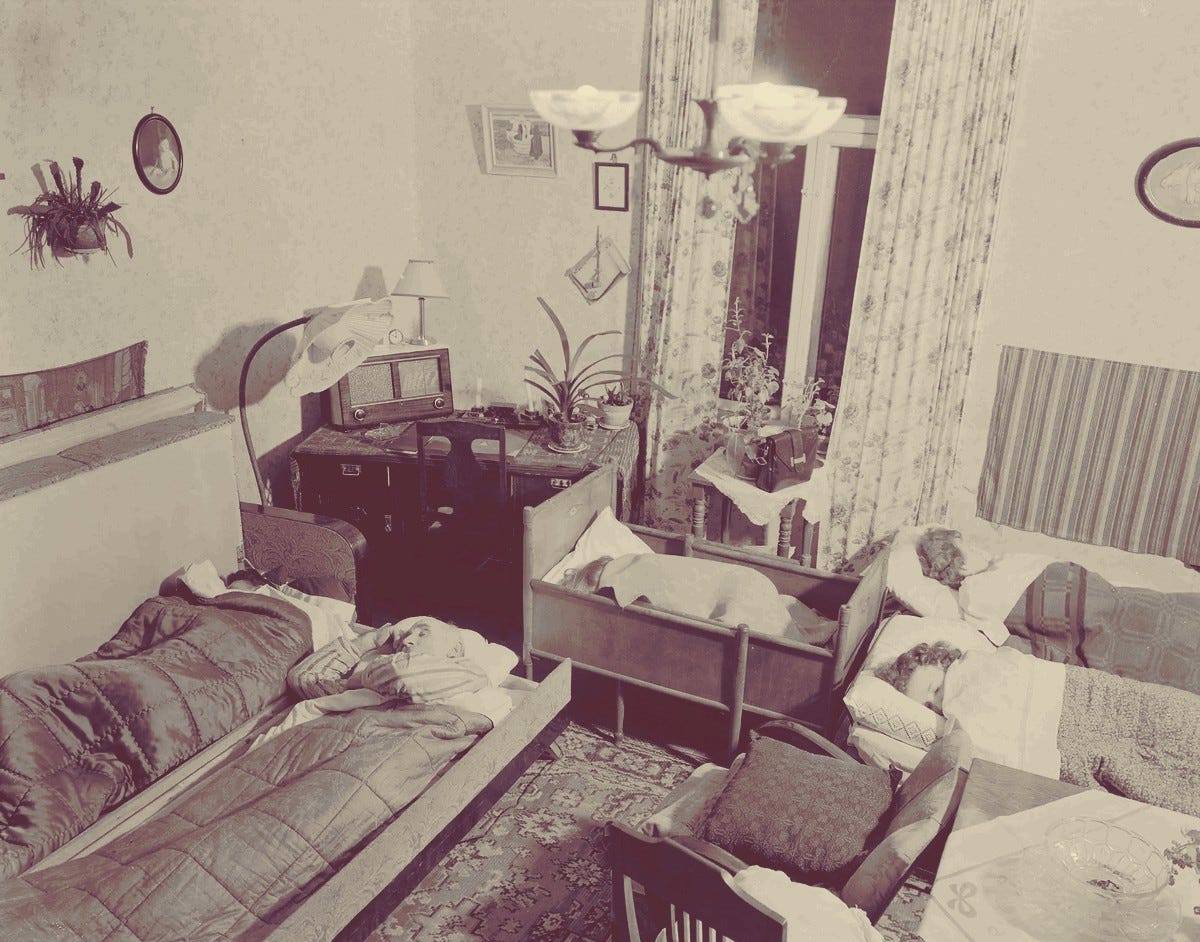
When the dream was sketched out on the screen, it turned out to be in black and white. I was a little surprised, as I thought I dreamed in colour, but the lecturer explained that it had to do with my age. Since I was born in the fifties, my childhood television experiences had been colourless, which had left their mark on my dreams, he maintained. The following night I tried to dream up turquoise and plum, but on printout these colours too proved to be different shades of grey. How was I to go about rejuvenating my dreams? I ordered psychedelic pills, subscribed to Cartoon Network, even started exercising, but without effect. Still only black and white. Drama even on the occasions when I found my inner show genuinely comic. I asked the lecturer whether he had any advice for me, and he suggested dementia. Even though that condition was persistent and worked its way from the present backwards, it would eventually crowd out my earliest television experiences and could thus be replaced by new ones in colour. It perhaps sounded a little too advanced, but I was the stubborn type.
Thank you for reading.
– Jörgen Löwenfeldt ✦ jorgenlowenfeldt.se
This dispatch went out to 1,906 readers across 86 countries. If it resonated with you, consider sharing it with a friend who might feel the same, leaving a comment, or recommending it on your own Substack.
A warm thank you to the 20 sponsors of The Bagatelles. Your belief in my work keeps me going, and as a paid subscriber you have access to all long-form content, including the novel Zenopolis, all chapters of Naïveté Travels, and my work in progress: Bardo Noir.
Do you have any feedback, ideas, or questions you would like to ask? Click here.
To receive new posts and support my work, consider becoming a free or paid subscriber.
This one includes yet another dream story:
✦✧ Looking for the archive? You can find every post here.

In the autumn of 2007, naturally, none of what would later happen had yet happened. I was an intern on the culture desk at Norrköpings Tidningar, commuting weekly to the…
Building up pressure can be a good thing and, if you need a recipe, try being a young first-time parent, never sleeping well, working constantly with other people’s demands, and…