
Bagatelle 11 min · Password required
Everyone’s Talking to Me
The first second of a day that doesn’t need its week: awakening. There’s clatter in the kitchen. Oh right, I’m me. Oh right, I’m at my second cousin’s in Lund. We drink instant…

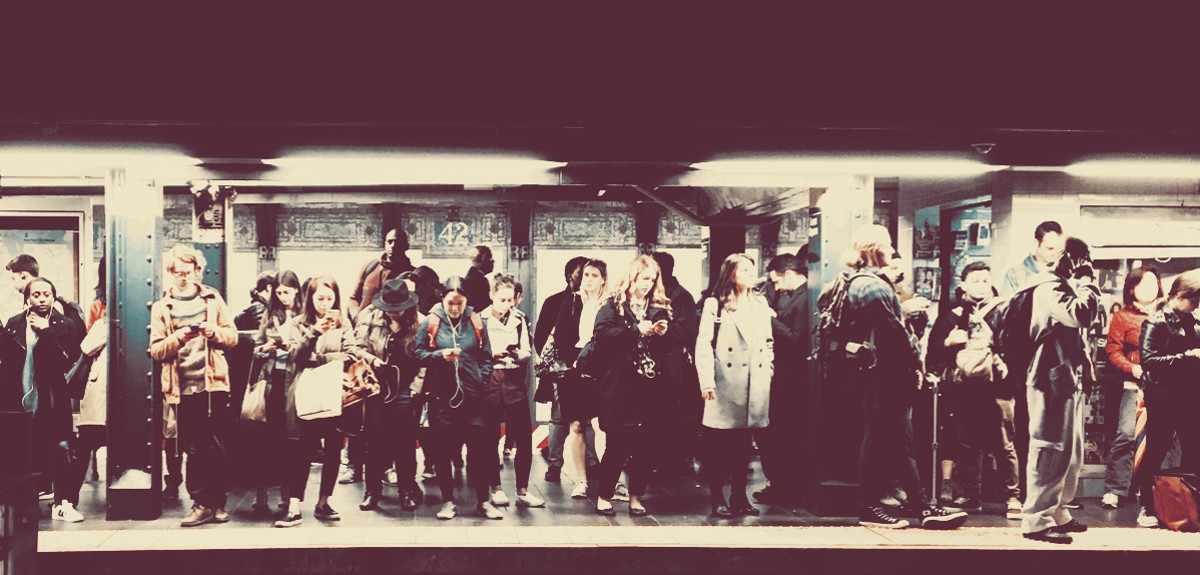
“I’m getting too old for this,” he said after work. “I used to think of it as a game, an art form even, but now it’s beginning to feel like theft.” He drained the last mouthfuls of beer until only the foam clung to the bottom of the bottle. On the table he laid out the day’s haul in neat columns: coins and notes, credit cards, mobile phones, and finally jewellery and gemstones. Bags, family photos and wallets had already been sorted aside, kept only in case of Gucci or Louis Vuitton, though most of what turned up in these neighbourhoods were fakes. “We’ve made a few weeks’ worth of honest full-time work today,” he said after a quick calculation. He handed me a thousand-kronor note, which I gratefully pocketed.
This was during the happy days of the nineties. Our collaboration had begun one morning a year or so earlier when I was, as usual, sitting at the corner café with my motorcycle helmet visibly resting on the seat beside me and a book on Sufism turned outward on the table. A trick for the shy, I thought. One of those neat university students who frequented the other tables might react to either one or the other, preferably the combination: depth and freedom. It never happened. Instead, the old men sat down next to me and began talking loudly, preparing for what I assumed was their day’s work. I had seen them there many times. They must have seen me at least as often. What was new was that I was addressed. The man in the cap, a sinewy type with a quick tongue, stared at me and waved his hand in the air to catch my attention. When I looked up, he asked: “You, biker boy, what are you doing this afternoon?” They were a man short. The fourth in their group, known as Junior, was in custody for arguing with a store detective, which he had informed the others of only when, far too late, he got hold of a phone. “Why?” I asked. “Thought you might want to earn a bit of money,” he said, pulled his chair closer to my table and added, in a lower voice: “Nothing difficult. A trained monkey could do it, but would probably stand out too much. So it’d be better if you joined in. You’ve shaved and all that.” I nodded, pretending to understand, and muttered: “Right, what do I have to do then?”
He was right that it wasn’t one of the harder jobs, and that I was the kind of man who needed easy money. I hadn’t had proper work in years. I kept up my film script mostly to be able to say it was my job, though in truth I alternated between shifts at the video shop and unemployment benefits, and frankly I preferred the benefits. On the way to the underground he gave a monologue about how bank cards were ruining everything, that the whole art form would die with him. Then came his stories: one bloke who pretended to be deaf whenever he was caught, another who could fake a heart attack, and a third who could swing his left arm all the way round a victim’s body while his right pointed towards some poster. He himself needed no gimmicks. He never got caught because his method was foolproof.
My task was to stand at Slussen underground station and hold the train doors open long enough for a crowd to gather at Medborgarplatsen. A minute was enough, but it was a minute that demanded nerve and comic timing. At the last moment I was to stumble onto the train, deliberately get stuck between the doors and collapse as if dead. Then all I had to do was wait for the driver to stop and the guards to come rushing in to sort things out, while my colleague, on the increasingly crowded platform a kilometre and a half away, could go about his craft: emptying back pockets of wallets, liberating women from earrings and rings depending on the situation, sometimes even snatching bags and briefcases, though only when the commotion was big enough. “Cash is king,” he said, meaning that banknotes always came first, as they left no trace and could easily be moved and exchanged.
In his youth he had been inspired by B-movies where prostitutes stole their clients’ wallets, their fingers appearing as if from nowhere. The craft within the craft he learned from an older gentleman outside the opera one evening when he had a side job selling popcorn. The old man’s hourly rate was considerably more impressive, as he could pinch anything simply by snapping his fingers with the other hand. It was hard not to be impressed by the softness and nonchalance the veteran displayed, and later taught. Back then my mentor never drank, not to dull his edge, but he had lost a bit towards the end, as he put it. That was when I came in, at the end.
So I did my best at Slussen that day. Stumbled between the doors and flailed around like a dying fish. What I hadn’t counted on was that bloody bodybuilder who came to my rescue. He simply lifted me into the carriage as if I were a broom that had fallen to the floor. A mild cheer in the carriage when I was “saved,” and then I had to act grateful too. It all went far too quickly, barely any delay at all. My partner only managed two or three wallets, and it was sheer luck that a boa-draped lady with a pearl necklace happened to be on the platform at the time. “What the hell could she have been doing there?” he exclaimed after work as he pried out her jewellery. Then he said: “Tourist, probably. But seriously. You put me in danger. That wasn’t good. In a similar situation Junior would have blurted out that he had a pacemaker or something and that he needed to lie still. You have to think. About safety. What do you think my kids would say if I ended up in prison? Ever thought about that?” “You have kids?”
He had both wife and children, apparently. The first was aware of how her holidays to Mallorca were financed, the latter naturally not. Not that there was anything wrong with the job, he emphasised, not at all, only that it wasn’t properly accepted as a profession yet, out there in society. The norms were shifting, but slowly. He saw himself as an artist, not far below a magician in rank. “But you know, we’ll all be gone soon. The day men switch to plastic cards I’ll have to find something else to do.” I laughed a little, because it felt customary to do so when your boss half-joked like that. I did feel a little hollow about my part in it all, but I tried to explain it to myself by thinking I had done nothing worse than delay a train for a minute, costing society a touch of efficiency and making someone a few seconds late to a meeting. I could live with that. The actual theft, so to speak, was his business. I never saw it.
We kept it up for a few more days, which turned into weeks, months, and a few seasons, and I never thought it would become a habit. It was just so nice finally to walk around with a plump wallet, open it at the bar and ask the girls: “Anything special you’d like? My treat.” It made a difference, it really did, I felt it in the flesh. I didn’t even need the motorcycle helmet anymore, so no one would know I didn’t even own a bike. It didn’t matter that I actually knew my Sufism. Guilt, sure, but life quality was worth more. There might not be a future in the trade, but who needed one with such a rich present? It wasn’t until that job by Sergels torg during the Christmas rush that something broke in me, and in him. As I’d grown more seasoned, the level of difficulty had risen too. Sometimes I had to distract a police officer with a plausible story about a missing poodle, other times offer to carry luggage for families so they’d forget their back pockets, while my colleague relieved them with his well-practised pincer grip, a graceful manoeuvre on a par with a somersault. He had no interest in the plastic cards, which he usually tore up and threw in the bin. Perhaps that was something for a younger generation, but that was another sport entirely, no finesse in jotting down numbers and draining accounts.
That afternoon we’d unfortunately come across a new kind of find. Naturally, when you empty people’s bags, you can end up with anything from tampons to disposable razors, lucky chestnuts or tissues. Every woman seemed to carry a year’s supply in her handbag, in case she needed to blow her nose dry, or what did I know about such things. But this time there was a letter without an addressee. No stamp either. Just an envelope, which I slit open and began to read, at first with a cheerful, roguish mood, like a teenager showing off to his mates. Soon I stopped reading and he asked: “Well then? What happened then?” I said: “I can’t read any more. It doesn’t feel right.” He was genuinely curious now and asked, far too excitedly, as if it were still a joke to him: “So, if I understand it right, he wrote a letter to a dead person? And he knew it was too late, but wrote it anyway?” I nodded slightly, and he said: “And he wrote that he now understood she’d been the love of his life and his best friend, but that he never did anything about it while she was alive?” “That’s how I understand it. Maybe a therapy thing.” “Bloody tragic,” he said and gulped down what remained of his beer. I asked him outright: “You mean it’s tragic to carry around that letter without being able to send it to anyone? Just having it. Day after day. Like an amulet. Is that what you mean?” He slammed the bottle down on the table and almost shouted for everyone around to hear: “All of it’s tragic. The letter. Us. The poor bastard who now knows someone’s reading his pathetic, belated lines and laughing themselves to death.” And that was when he started lamenting that it was all beginning to feel like theft, before he handed me another thousand-kronor note to keep me quiet, I assumed, which I gratefully accepted, because a thousand was a thousand.
We never met again. I stopped going to the café in the mornings, and I don’t know if he kept going, but I doubt it. It was as if the illusion broke for both of us that afternoon. Not because of the letter, but because of his questioning of everything we’d been doing. It was almost like theft, he claimed. And I was no thief. Far from it.
The first second of a day that doesn’t need its week: awakening. There’s clatter in the kitchen. Oh right, I’m me. Oh right, I’m at my second cousin’s in Lund. We drink instant…

In the good old days it was easy to get in everywhere. All you had to do was read the marks on the keypad and guess the movement. Like at my grandmother and grandfather’s, where…

At launch, they called me the Union’s hero. The Emperor addressed the people, speaking of my vital mission as the intergalactic high guard. I was tasked with watching over the…