
Bagatelle 8 min
SkateCal
Let us say you have become someone’s parent, perhaps imagining that it would be cosy to become one of those blissfully meandering couples with a sleeping little creature in a…

Well? A tiny slit appears between her eyelids, through which she regards you without really seeing you, or at least without acknowledging you. She flicks through the envelopes with deft fingers, a bit like a croupier shuffling a deck of cards. Names rattle past in just that way, and she repeats what she said before: No, the tickets have already been collected. She might as well have added: The person who is you has already been here.
It doesn’t matter what you say now, that you insist anyone in the foyer can vouch for you being the Critic, because she hasn’t got time to ask anyone. Of course it would have helped if you’d brought your driving licence, she points out, because proof is proof, but since you won’t give up she slides you a student ticket. So long as you make room for others in the queue and let her get on with her job of filling the theatre with paying guests.
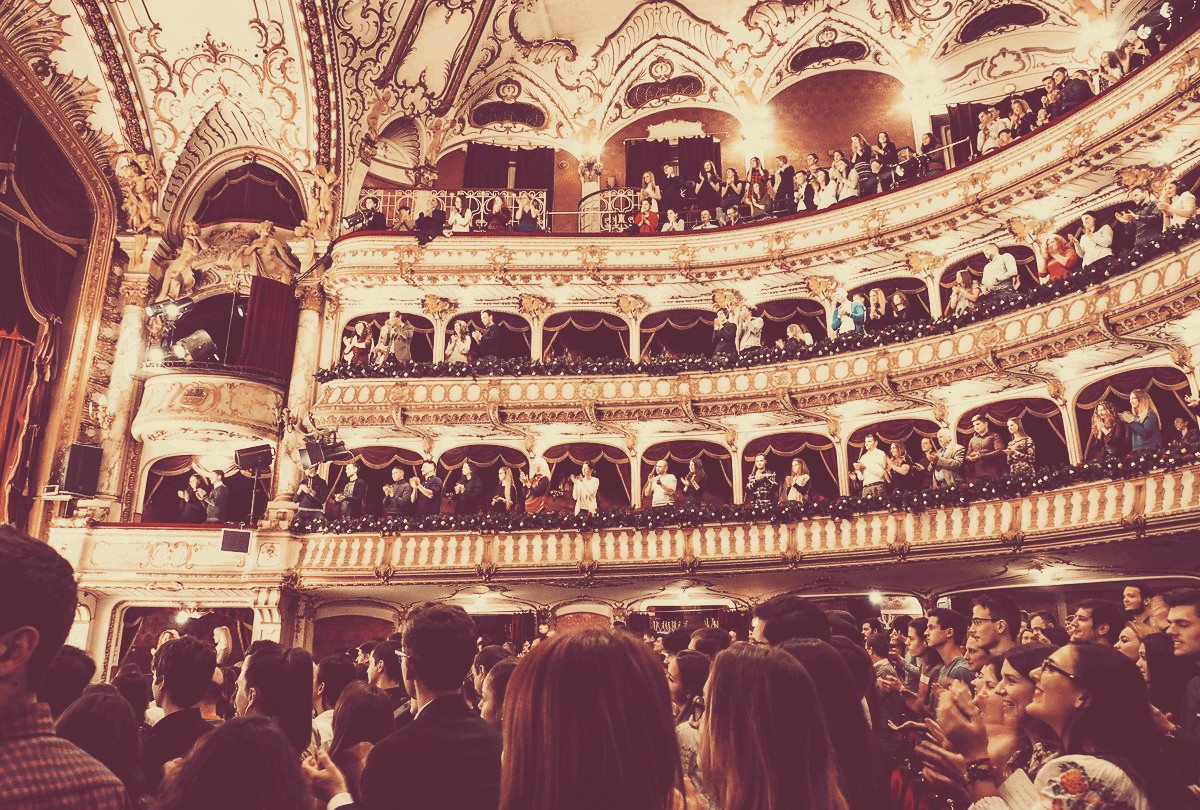
You end up in the gallery, naturally, and to make matters worse, right at the back beside two pillars and some sixth formers forced to attend by their teacher. They keep scrolling on their phones even after the curtain rises, and as the stage lights come up you can glimpse the audience along the front row. There, eight seats in, sits a bald head resembling your own, wearing a brown corduroy jacket, just like you. When he turns his head towards the aisle you can even see the bright orange frames of his glasses. An ambitious disguise. No wonder the girl at the counter couldn’t tell you apart. The impostor has probably used the tickets many times, while you’ve only gone to keep yourself up to date. In recent years you’ve gone less and less. One could even argue that it’s for the best if someone else occupies the seat. In the grand accounting of the universe, the fraudster restores the balance.
Then the spectacle begins down on stage. It’s a wretched performance in which the actors expose their tools and scaffolding instead of daring to lose control. The script does not help them. The dialogue is a painfully sentimental and introverted mess about a PhD student’s tribulations, with only one interesting line: Academics are often good runners. Lucky for everyone involved that you’re not reviewing this, and poor man who must sit in the front row and, with feigned attentiveness, meet the eyes of those pitiful, talentless buffoons.
During the interval you trip down towards the bar to meet him, no longer angry but rather impressed by the nerve of it, to stand at the counter without hesitation and ask for Joseph C. Rothstein’s ticket, receive it, and spend the entire performance embodying the role of the Critic. Probably the evening’s only sharp performance, you think, since by now you’ve already drifted from the actual chain of events to how you’ll describe it in your column.
Strange, how reality can drift hazily before you for so long without your noticing it, and then it’s as if an inner bell rings, the signal for story, and the sequence gains contour. You could almost have paid to be deceived like this, to become, so to speak, a talking point, a person worth imitating (you didn’t think you were that well known until now). Soon friends and strangers will ask about your daring double, and you’ll say you were impressed, laugh briefly, not ironically but sincerely, as if to suggest there’s something here for all those conservative normies with Revolutionary Road tendencies to learn. You can already hear yourself saying and doing it as you think about how you’ll react. These things happen at the speed of lightning.
He’s standing with a glass of sparkling wine in the gold room, not the least bit ashamed. Probably thinking the safest way not to get caught is to stand in plain sight. There’s some saying about that, about how a lie should be either well hidden or not hidden at all, and here he is. You buy a glass of fizz yourself, stride up to him and say: Cin-cin. He looks at you in astonishment, of course, studies you from head to toe and back again, and when he meets your gaze he asks: Is this some kind of joke? You reply: I was just about to ask the same. He says, without a hint of a smile: Not only must I endure this drivel, I also have the beginnings of a migraine, and on top of it all some clown has dressed up as me. Then a woman joins him. Brunette, salon-polished and at least three decades younger than the bald man. She startles at the sight of you, hesitates over whom to offer the olives, then chooses him and mutters quietly, but you hear her: Creepy, should I call security? He shakes his head, waves one hand as if brushing off a street vendor. No, we’re done here.
And you are. He returns to his seat for the second act, and you leave the theatre. Probably for the best, you think, slightly shaken, as you walk along the chilly Arsenalsgatan. It seems to have rained in the meantime, puddles are scattered everywhere. Better if he writes the piece, you think then, probably to ward off the gloom. Seen from his perspective, the story turned out even more absurd. And in the grand accounting of the universe, it’s probably for the best.
Let us say you have become someone’s parent, perhaps imagining that it would be cosy to become one of those blissfully meandering couples with a sleeping little creature in a…
I.N. fell ill in August 2020, though in an alternative chronology, that was also when he began to recover. In his conversations with me, he described in detail the internal process…

In the good old days it was easy to get in everywhere. All you had to do was read the marks on the keypad and guess the movement. Like at my grandmother and grandfather’s, where…